- Speaks
- English
- Specialises in
- Luxury, Villas
- Website
- charlesmarlow.com
Estate agents in Deià
101 agencies, listed in three groups: offices in Deià first, then offices nearby, then others. How we list agents
West & Tramuntana · 3 places
Showing all 101 agenciesOrder: offices in Deià first
1
3 agencies
Offices in Deià
Agencies with a shopfront in Deià.
- Speaks
- English, German, Spanish, Catalan
- Specialises in
- Villas, Fincas, Village houses
- Website
- engelvoelkers.com
- Speaks
- English, Spanish
- Specialises in
- Luxury, Fincas, Villas
- Website
- saraballdeia.com
2
11 agencies
Offices nearby that cover Deià
Based elsewhere in the West & Tramuntana, working in Deià.
- Speaks
- English, German, Spanish, French, Italian, Catalan
- Specialises in
- Village houses, Villas
- Website
- casasmallorca.com
- Speaks
- English, German, Spanish, Russian, Swedish
- Specialises in
- Luxury, Villas
- Website
- firstmallorca.com
- Speaks
- Spanish, Catalan, English, German
- Specialises in
- Village houses, Fincas
- Website
- inmobiliariacoll.com
- Speaks
- Spanish
- Specialises in
- Village houses, Apartments
- Website
- sollerhomes.com
- Speaks
- English, Spanish, German, Swedish, French, Dutch, Catalan
- Specialises in
- Luxury, Villas
- Website
- bhhsspain.com
- Speaks
- Spanish, English, French, Catalan
- Specialises in
- Village houses, Fincas
- Website
- habitatsoller.es
- Speaks
- Spanish, Catalan, English, French, German
- Specialises in
- Village houses, Apartments
- Website
- xiscacoll.com
- Speaks
- German, English, Spanish
- Specialises in
- Villas, Fincas, Luxury
- Website
- kensington-international.com
- Speaks
- Spanish, English, German, French
- Specialises in
- Fincas, Village houses, New builds
- Website
- livingblue-mallorca.com
- Speaks
- English, German, Spanish, French, Catalan, Danish
- Specialises in
- Villas, Fincas
- Website
- mallorca-dreamhomes.com
- Speaks
- German, English, Spanish
- Specialises in
- Fincas, Village houses
- Website
- sollerstudio.com
3
87 agencies
Other agents covering Deià
Island-wide agencies and agencies based elsewhere.
- Speaks
- German, English, Spanish
- Specialises in
- Luxury, Villas
- Website
- herzog-mallorca.com
- Speaks
- English, German, Spanish
- Specialises in
- Village houses, Fincas
- Website
- 39north3east.com
- Speaks
- Spanish, Catalan, English
- Specialises in
- Apartments
- Website
- durendesa.com
- Speaks
- German, English, Spanish
- Specialises in
- Villas, Apartments
- Website
- edelhof.com
- Speaks
- English, German, Spanish
- Specialises in
- Villas, Apartments
- Website
- heritagehomesmallorca.com
- Speaks
- Spanish, Catalan, English
- Specialises in
- Apartments
- Website
- inmobiliariaoliver.com
- Speaks
- German, English, Spanish
- Specialises in
- Villas, Apartments
- Website
- kunze-partner.com
- Speaks
- Spanish
- Specialises in
- Fincas, Villas
- Website
- laposesionmallorquina.com
- Speaks
- German, English, Spanish
- Specialises in
- Fincas
- Website
- mallorcafincavianden.com
- Speaks
- German, English, Spanish
- Specialises in
- Villas, Apartments
- Website
- mayer-dau.es
- Speaks
- English, Swedish, Spanish
- Specialises in
- Luxury, Apartments, Villas
- Website
- palmamarkets.com
- Speaks
- German, English, Spanish
- Specialises in
- Luxury, Villas
- Website
- privatehideaway.com
- Speaks
- German, Russian, English, Spanish
- Specialises in
- Apartments
- Website
- redhawk-realestate.com
- Speaks
- English, German, Spanish
- Specialises in
- Luxury, Villas, Apartments
- Website
- sae-mallorca.com
- Speaks
- German
- Specialises in
- New builds, Villas
- Website
- swiftbalear.com
- Speaks
- Spanish
- Specialises in
- Villas, Apartments
- Website
- zainoscapital.com
- Speaks
- Spanish, English, German, French
- Specialises in
- Apartments
- Website
- balearinvest.com
- Speaks
- Spanish
- Specialises in
- Fincas
- Website
- mallorcahouse.com
- Speaks
- German, English, Spanish
- Specialises in
- Apartments, Villas, Fincas
- Website
- smartlivingmallorca.com
- Speaks
- Spanish, English, German
- Specialises in
- Villas, Fincas, Apartments
- Website
- filmhouses.com
- Speaks
- English, Spanish, German
- Specialises in
- Villas, Fincas
- Website
- villasplanet.com
- Speaks
- English, German, Spanish, Russian, French, Dutch, Swedish, Polish
- Specialises in
- Villas, Fincas, Apartments
- Website
- portamallorquina.com
- Speaks
- Spanish
- Specialises in
- Apartments
- Website
- uccsl.com
- Speaks
- Spanish
- Specialises in
- Apartments, Fincas
- Website
- grupdirect.com
- Speaks
- Spanish, Catalan, English, German, Russian
- Specialises in
- Apartments
- Website
- viviendasmria.com
- Speaks
- English, German, Spanish
- Specialises in
- Villas, Apartments
- Website
- falcrealestate.com
- Speaks
- Spanish, English, German
- Specialises in
- Apartments, Villas
- Website
- mogohomes.com
- Speaks
- Spanish, Catalan, English, French, German
- Specialises in
- Apartments, Villas
- Website
- aproperties.es
- Speaks
- Spanish
- Specialises in
- Villas
- Website
- atrioinmobiliaria.com
- Speaks
- Spanish, English, German, Italian
- Specialises in
- Apartments, Villas
- Website
- realestatebalear.com
- Speaks
- Spanish, English, German
- Specialises in
- Luxury, Villas, Apartments
- Website
- balearhouse.com
- Speaks
- English, Spanish, German, Swedish, French
- Specialises in
- Luxury, Villas, Apartments
- Website
- balearicblue.com
- Speaks
- English, Spanish, French, Swedish, Portuguese, Italian
- Specialises in
- Luxury, Villas, Apartments
- Website
- barnes-international.com
- Speaks
- English, Swedish, Spanish
- Specialises in
- Villas, Apartments
- Website
- bjurfors.se
- Speaks
- Spanish, English, German, French, Italian, Swedish, Arabic
- Specialises in
- Luxury, Fincas
- Website
- bonafinca.com
- Speaks
- Spanish, English
- Specialises in
- Apartments, Luxury
- Website
- brokersmallorca.com
- Speaks
- Spanish
- Specialises in
- Apartments
- Website
- cbpisos.com
- Speaks
- English, German, Spanish, French, Polish, Russian, Swedish
- Specialises in
- New builds, Villas
- Website
- cjrealestate.eu
- Speaks
- Spanish, English, German
- Specialises in
- Apartments
- Website
- cocoinmobiliaria.com
- Speaks
- German, English, Spanish
- Specialises in
- Luxury, Villas, Fincas
- Website
- dahlercompany.com
- Speaks
- Spanish, English
- Specialises in
- Luxury
- Website
- daviniacaldes.com
- Speaks
- Spanish, English
- Specialises in
- Fincas, Apartments
- Website
- delmargroup.es
- Speaks
- Spanish, English, German
- Specialises in
- Villas, Apartments
- Website
- domo-plan.com
- Speaks
- English, Spanish
- Specialises in
- Apartments, Villas
- Website
- fantasticfrank.com
- Speaks
- Swedish, English, Spanish
- Specialises in
- Apartments, Villas
- Website
- fastighetsbyran.com
- Speaks
- German, English
- Specialises in
- Villas, Luxury
- Website
- firstclass-estate.com
- Speaks
- Spanish, English, German
- Specialises in
- Apartments
- Website
- gestpropiedad.com
- Speaks
- Spanish, English, German
- Specialises in
- New builds, Apartments
- Website
- gregalproperties.com
- Speaks
- German, English, Spanish, French
- Specialises in
- Apartments, Villas
- Website
- huether-partner-mallorca.de
- Speaks
- Spanish
- Specialises in
- Apartments
- Website
- ilfinmobiliaria.com
- Speaks
- German, English, Spanish
- Specialises in
- Fincas, Villas
- Website
- inm-mallorca.com
- Speaks
- Spanish
- Specialises in
- Villas, Fincas
- Website
- estarellasbroker.com
- Speaks
- Spanish
- Specialises in
- Apartments, Villas
- Website
- inmobiliariamutbymarian.es
- Speaks
- Spanish
- Specialises in
- Villas, Fincas, Apartments
- Website
- sescorxador.com
- Speaks
- Spanish, Catalan, English, German
- Specialises in
- Apartments, Villas
- Website
- inmodomum.com
- Speaks
- Spanish
- Specialises in
- Apartments
- Website
- inmopropiedad.com
- Speaks
- Spanish
- Specialises in
- Village houses, Apartments
- Website
- inmorange.com
- Speaks
- Spanish, English
- Specialises in
- Villas, Luxury
- Website
- inmovita.es
- Speaks
- Spanish, English, German, Russian
- Specialises in
- Apartments, Villas
- Website
- jd-residences.com
- Speaks
- Spanish, German, English, Russian
- Specialises in
- Apartments, Villas
- Website
- keystonemallorca.com
- Speaks
- Spanish, English
- Specialises in
- Apartments, New builds
- Website
- laboutiqueinmobiliaria.com
- Speaks
- Spanish
- Specialises in
- Apartments, New builds
- Website
- labproperties.es
- Speaks
- Spanish, English
- Specialises in
- Apartments
- Website
- maberty.com
- Speaks
- Spanish
- Specialises in
- Apartments, Villas
- Website
- mallorcagestion.com
- Speaks
- Swedish, English, Spanish
- Specialises in
- Apartments, Villas
- Website
- mallorcabyran.se
- Speaks
- Spanish, English
- Specialises in
- Villas, Fincas, Apartments
- Website
- mallorcasa.es
- Speaks
- Spanish, English, German
- Specialises in
- Fincas, Village houses, Luxury
- Website
- medina-mallorca.com
- Speaks
- Spanish, English, German, French
- Specialises in
- Apartments
- Website
- morcas.com
- Speaks
- English
- Specialises in
- Luxury
- Website
- nestseekers.com
- Speaks
- Spanish, English, German
- Specialises in
- Villas, Apartments, Fincas
- Website
- nicolasmessias.com
- Speaks
- Spanish
- Specialises in
- Apartments
- Website
- nn-realestate.com
- Speaks
- Spanish, English, German
- Specialises in
- Luxury, Villas, Fincas
- Website
- nofreplomerpremium.com
- Speaks
- Spanish
- Specialises in
- Apartments
- Website
- palmarealtor.com
- Speaks
- English, Spanish, German
- Specialises in
- Luxury, Fincas, Villas
- Speaks
- English, Spanish, German, French
- Specialises in
- Villas, Fincas
- Website
- pollentiaproperties.com
- Speaks
- Spanish, English, German, French, Italian, Swedish
- Specialises in
- Apartments, Villas
- Website
- puroestate.com
- Speaks
- Spanish
- Specialises in
- Villas, Fincas, New builds
- Website
- redpremium.es
- Speaks
- Spanish
- Specialises in
- Apartments
- Website
- inmo83.com
- Speaks
- Spanish, English, German
- Specialises in
- Fincas
- Website
- rusticamallorca.com
- Speaks
- German, English, Spanish
- Specialises in
- Luxury, Villas
- Website
- smartestatesmallorca.com
- Speaks
- English, German
- Specialises in
- Villas, Fincas
- Website
- soul-homes.com
- Speaks
- English, Spanish, German, French, Italian, Dutch, Russian, Catalan, Polish, Portuguese
- Specialises in
- Luxury, Villas
- Website
- spain-sothebysrealty.com
- Speaks
- German, English, Spanish
- Specialises in
- Villas, Apartments
- Website
- steinhomes.es
- Speaks
- Swedish, English
- Specialises in
- Apartments, Villas
- Website
- svenskfast.se
- Speaks
- English, German, Dutch, Swedish, Spanish, Catalan, Italian, French
- Specialises in
- Luxury, Villas
- Website
- theagencyre-mallorca.com
- Speaks
- Spanish
- Specialises in
- Apartments, Villas
- Website
- villainvest.es
- Speaks
- German, English, Spanish
- Specialises in
- Fincas, New builds, Villas
- Website
- ywc-realestate.com
Featured agents pay to appear first in their group and are always labelled. How we list agents →
No agencies here match those filters.
Places in Deià
3 places have their own page.
Living here
The municipality of Deià (Deyá in Castilian) covers about 15 square kilometres of steep mountainside and cliff coast in the Serra de Tramuntana, between Valldemossa and Sóller, 45 to 55 minutes from Palma. Nearly all of its roughly 740 residents live in the hill village, with the rest at Cala Deià, Llucalcari and a few small clusters. It suits buyers who put landscape and character before convenience.
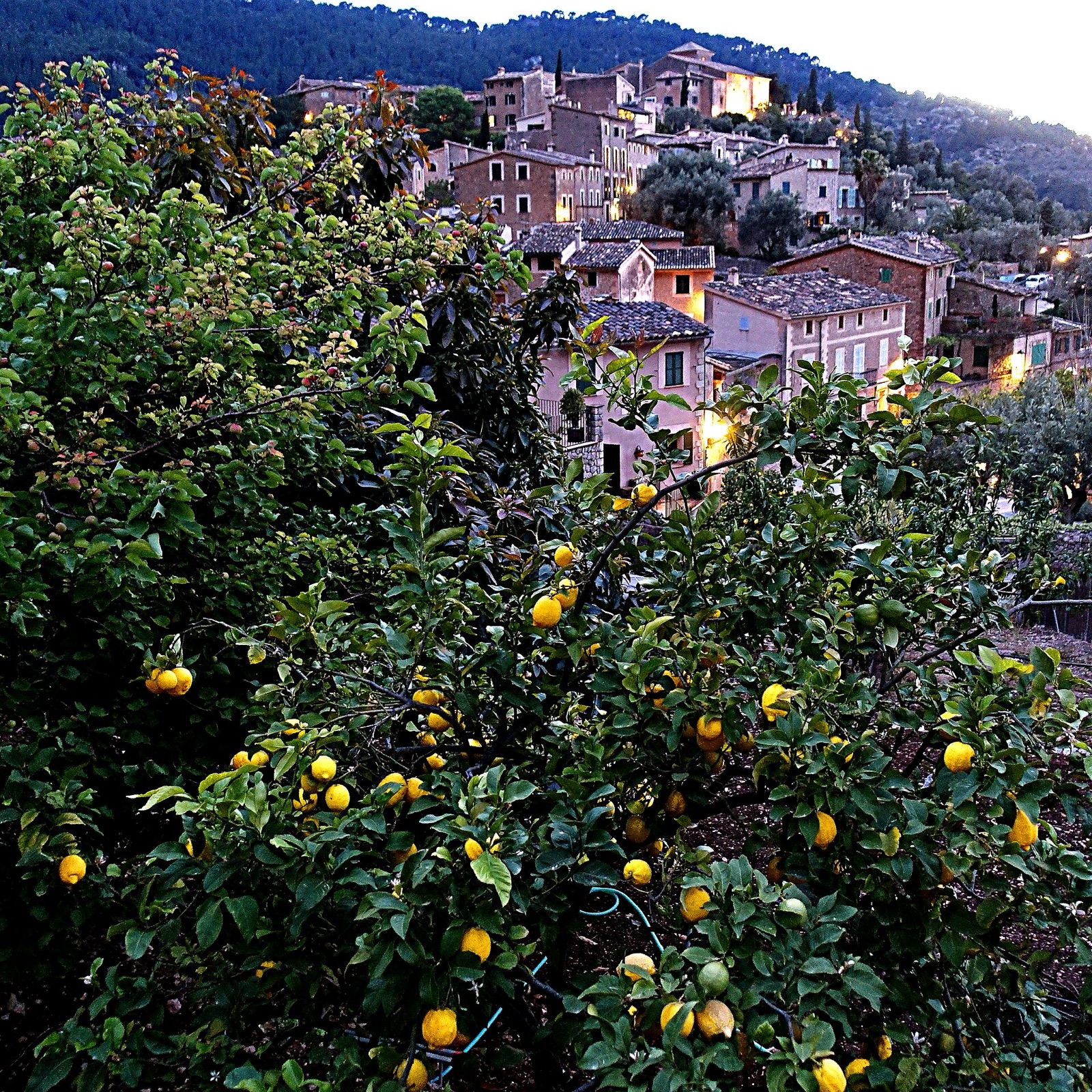
Deià borders Valldemossa to the south-west, Sóller to the north-east and Bunyola inland, and runs from the Puig del Teix, 1,064 metres high, down to about 5 kilometres of steep, rocky coast. Pine and holm oak woods cover the higher ground, olive terraces the lower slopes, and orange and lemon trees grow in the valley bottoms. The Ma-10 coast road runs through it, and the GR 221 Dry Stone Route crosses it on foot. It lies in the Serra de Tramuntana, a UNESCO World Heritage landscape since 2011, and its natural surroundings belong to the protected Serra de Tramuntana natural area.
Almost everyone lives in the hill village, which has the town hall, the school and the shops. The 2025 register counted about twenty people in s’Empeltada, a small development just north of the village on the Sóller road, 18 in the hamlet of Llucalcari and about a dozen at Cala Deià, with a handful more at ses Coves and Son Coll. Ses Coves and Ca l’Abat are newer clusters on the slopes just north of the village, and old estates spread over the terraces, among them Son Marroig to the west, once the Archduke Ludwig Salvator’s and now a museum.
The town hall, known as Es Porxo, is in Carrer Porxo in the village, which also has the Sa Tanca cultural centre and the Joan Graves municipal library. There is a municipal nursery for under-threes, the Robert Graves state primary school and a health post that opens two mornings a week. Beyond that, residents rely on Sóller. The Serra Nord health centre there covers everyday care, with urgent care (PAC) at night and at weekends, and the nearest state secondary school, IES Guillem Colom Casasnoves, is in Sóller too. For petrol, the town hall points drivers to Sóller.
TIB line 203 runs the length of the municipality on the Ma-10, stopping at Llucalcari, s’Empeltada, the village and Son Gallard. One way it goes to Sóller and Port de Sóller, the other to Valldemossa, Son Espases hospital and Palma. No bus goes down to Cala Deià. From spring to autumn day-trippers bring heavy traffic and parking is very limited, so the council runs resident permit (ZAR) parking zones in the village, s’Empeltada, Cala Deià and Llucalcari. Water is a real worry: in the summers of 2025 and 2026 the council cut mains water three days a week in some outlying areas, and tankers topped up the network.
Who buys here
Deià’s foreign community dates from after the First World War. The poet Robert Graves, who arrived in 1929, was among the first, and painters, writers and musicians followed. For years about a third of registered residents have been foreign nationals. Buyers are usually well off and choose between the village, a house near the sea at Cala Deià or Llucalcari, and a country house on the terraces. Many homes are second homes or holiday lets, and a 2021 count found nearly twice as many registered tourist beds as residents.
Property
Homes are few and varied, with almost no apartment blocks. The village has old stone houses and townhouses on cobbled lanes. Around it, old country estates and detached houses spread over the terraces, along with newer clusters such as s’Empeltada, Ca l’Abat and ses Coves. Cala Deià has fishermen’s houses and the small Sa Cala development, and Llucalcari a small group of old houses with defensive towers. Large parts of the village, Cala Deià, Llucalcari and Son Coll are a listed historic ensemble (conjunt històric). In 2022 the council suspended most new licences, pools included, for a year, and in 2026 a new general plan was still in draft.
Getting around
Approximate times by car, outside rush hour.
- 45–55min
Central Palma (Cathedral)45 from the village, 45–50 from Llucalcari, 50–55 from Cala Deià
- 45–60min
Palma airport45–50 from the village and Llucalcari, 55–60 from Cala Deià
- 15–25min
SóllerHealth centre and secondary school; 15 from Llucalcari, 15–20 from the village, 20–25 from Cala Deià
- 35–45min
Son Espases hospitalPalma’s main public hospital; 35 from the village, 40–45 from Cala Deià
- 15–20min
ValldemossaSouth-west from the village along the Ma-10
How Deià breaks down
-
The hill village holds nearly all residents and the everyday services: the town hall, nursery, primary school, health post, food shops and pharmacy. Stone houses climb from es Clot to es Puig and the church, with the busy Ma-10 running through the middle. S’Empeltada, just to the north, relies on it.
-
The pebble cove about 2 km below the village, where the Torrent Major meets the sea, with fishermen’s houses, boat sheds and the small Sa Cala development beside it. About a dozen registered residents; busy in summer, very quiet out of season.
-
A hamlet of about twenty buildings and old defensive towers 3 km towards Sóller, just below the Ma-10, with a path down to the small cove of es Canyeret. It has no shops and had 18 registered residents in 2025.
Pros and cons
For
- Mountains and sea in the UNESCO-listed Serra de Tramuntana
- A choice of hill village, seaside cove or quiet hamlet
- Bus along the Ma-10 to Sóller, Valldemossa and Palma
- Long-standing foreign community and a summer music festival
Against
- Day-trippers, scarce parking and heavy summer traffic on the Ma-10
- Health post two mornings a week; no secondary school
- Summer water cuts in outlying areas, and water brought by tanker
- Listed village cores, and a general plan still in draft
Questions buyers ask
Which places make up the municipality of Deià?
The hill village of Deià, where nearly all of its roughly 740 residents live, the cove of Cala Deià about 2 km below it, the hamlet of Llucalcari 3 km towards Sóller and the small s’Empeltada development just north of the village. It borders Valldemossa, Sóller and Bunyola.
How do the village, the cove and Llucalcari compare?
Go for the village if you want to walk to the shops, the school and the bus. Cala Deià means living almost on the water, with summer crowds on the doorstep and no shops. Llucalcari is a very quiet hamlet with a bus stop but no shops, so most errands mean a short drive.
Where are the nearest doctor, hospital and secondary school?
Deià’s health post opens two mornings a week, and the Serra Nord health centre in Sóller, 15 to 25 minutes away, covers everyday care, with urgent care at night and at weekends. IB-Salut names Son Llàtzer in Palma as that centre’s reference hospital, while Son Espases, Palma’s main public hospital, is 35 to 45 minutes by car. The nearest state secondary school is in Sóller.
Is water a problem in Deià?
In summer it can be. In August 2025, and again from August 2026, the council cut mains water on Mondays, Wednesdays and Fridays in areas including Llucalcari, ses Coves and Cala Deià, and in mid-2026 it was bringing in 5 to 6 tanker loads a day. Ask about storage tanks before you buy.
Can I build, extend or add a pool?
Expect tight limits everywhere. Large parts of the village, Cala Deià, Llucalcari and Son Coll are a listed historic ensemble, in 2022 the council suspended most new licences, pools included, for a year while it reformed its planning, and a new general plan was still being drafted in 2026. At Llucalcari, four houses built under 1980s licences were later demolished by court order, so get a local architect’s advice first.