- Speaks
- Spanish, Catalan, English
- Specialises in
- Apartments
- Website
- talaiotinmobiliaria.com
Estate agents in Palma
224 agencies, listed in two groups: offices in Palma first, then others. How we list agents
Palma · 22 neighbourhoods
Showing all 224 agenciesOrder: offices in Palma first
1
187 agencies
Offices in Palma
Agencies with a shopfront in Palma.
- Speaks
- Spanish, English, French, Swedish
- Specialises in
- Apartments
- Website
- fincascalamajor.com
- Speaks
- Swedish, English, Spanish, German, Danish, Norwegian, Finnish, Catalan, Italian
- Specialises in
- Apartments
- Website
- bo-mallorca.com
- Speaks
- English, German, Spanish
- Specialises in
- Luxury, Apartments, Villas
- Website
- ocean-seven.com
- Speaks
- Spanish
- Specialises in
- Apartments
- Website
- algoritmoinmobiliaria.com
- Speaks
- English, Swedish, German, Spanish
- Specialises in
- Apartments, Villas
- Website
- buyahomemallorca.com
- Speaks
- Spanish, Catalan, English
- Specialises in
- Apartments
- Website
- durendesa.com
- Speaks
- German, English, Spanish
- Specialises in
- Villas, Apartments
- Website
- edelhof.com
- Speaks
- Spanish, English, German
- Specialises in
- Luxury, Villas, Apartments
- Website
- elevenhomes.com
- Speaks
- Spanish
- Specialises in
- Apartments
- Website
- inmobiliariapalma.com
- Speaks
- English, Swedish
- Specialises in
- Luxury, Villas
- Website
- homerunmallorca.com
- Speaks
- Spanish
- Specialises in
- Apartments, Luxury
- Website
- housingp.com
- Speaks
- Spanish, Catalan, English
- Specialises in
- Apartments
- Website
- inmobiliariaoliver.com
- Speaks
- German, English, Spanish
- Specialises in
- Villas, Apartments
- Website
- kunze-partner.com
- Speaks
- Spanish
- Specialises in
- Fincas, Villas
- Website
- laposesionmallorquina.com
- Speaks
- German, English, Spanish
- Specialises in
- Fincas
- Website
- mallorcafincavianden.com
- Speaks
- German, English, Spanish
- Specialises in
- Luxury, Villas
- Website
- marcelremusrealestate.com
- Speaks
- German, English, Spanish
- Specialises in
- Villas, Apartments
- Website
- mayer-dau.es
- Speaks
- Spanish, English, German
- Specialises in
- Apartments
- Website
- napporealestate.com
- Speaks
- Spanish
- Specialises in
- Apartments
- Website
- novamig.com
- Speaks
- English, Swedish, Spanish
- Specialises in
- Luxury, Apartments, Villas
- Website
- palmamarkets.com
- Speaks
- Spanish
- Specialises in
- Apartments
- Website
- remaximmocorner.com
- Speaks
- German, Russian, English, Spanish
- Specialises in
- Apartments
- Website
- redhawk-realestate.com
- Speaks
- English, German, Spanish
- Specialises in
- Luxury, Villas, Apartments
- Website
- sae-mallorca.com
- Speaks
- English, Spanish, Finnish, Swedish
- Specialises in
- Luxury, Apartments, Villas
- Website
- strandproperties.com
- Speaks
- German
- Specialises in
- New builds, Villas
- Website
- swiftbalear.com
- Speaks
- Spanish
- Specialises in
- Apartments
- Website
- viviendasjosegomez.es
- Speaks
- Spanish
- Specialises in
- Villas, Apartments
- Website
- zainoscapital.com
- Speaks
- Spanish, English, German, French
- Specialises in
- Apartments
- Website
- balearinvest.com
- Speaks
- Spanish
- Specialises in
- Apartments
- Website
- fincastorrens.com
- Speaks
- English, German, Spanish, Russian, Swedish
- Specialises in
- Luxury, Villas
- Website
- firstmallorca.com
- Speaks
- Spanish, English, French
- Specialises in
- Luxury, Apartments
- Website
- inmo-bienvenue.com
- Speaks
- Spanish, English, German
- Specialises in
- Apartments
- Website
- inmovisa.com
- Speaks
- Spanish
- Specialises in
- Fincas
- Website
- mallorcahouse.com
- Speaks
- German, English, Spanish
- Specialises in
- Villas, Apartments, Luxury
- Website
- minkner.com
- Speaks
- Spanish
- Specialises in
- Apartments
- Website
- olivermateu.com
- Speaks
- Spanish, German, English
- Specialises in
- Luxury, Apartments
- Website
- ksa-estates.com
- Speaks
- Spanish, English, German
- Specialises in
- Apartments, New builds
- Website
- palmerinmobiliaria.com
- Speaks
- English, Norwegian, Spanish, German
- Specialises in
- Apartments, Villas
- Website
- ellimon.com
- Speaks
- Spanish, English, German
- Specialises in
- Villas, Fincas, Apartments
- Website
- filmhouses.com
- Speaks
- Spanish, English
- Specialises in
- Apartments
- Website
- mundopisos.com
- Speaks
- English, German, Spanish, Russian, French, Dutch, Swedish, Polish
- Specialises in
- Villas, Fincas, Apartments
- Website
- portamallorquina.com
- Speaks
- Spanish
- Specialises in
- Apartments
- Website
- uccsl.com
- Speaks
- Spanish
- Specialises in
- Apartments, Fincas
- Website
- grupdirect.com
- Speaks
- Spanish, English
- Specialises in
- Apartments
- Website
- living-palma.com
- Speaks
- Spanish, Catalan, English, German, Russian
- Specialises in
- Apartments
- Website
- viviendasmria.com
- Speaks
- German, English, Spanish
- Specialises in
- Luxury, Villas
- Website
- villa-kaufen-mallorca.com
- Speaks
- English, Swedish, French, Spanish, German
- Specialises in
- Apartments, Villas
- Website
- mallorcahem.com
- Speaks
- English, German, Spanish
- Specialises in
- Villas, Apartments
- Website
- falcrealestate.com
- Speaks
- Spanish
- Specialises in
- Apartments
- Website
- vidamar.net
- Speaks
- Spanish, English, German
- Specialises in
- Apartments, Villas
- Website
- mogohomes.com
- Speaks
- English, German, Spanish, French
- Specialises in
- Luxury, Villas
- Website
- john-taylor.com
- Speaks
- Spanish, English, German, Swedish
- Specialises in
- Apartments, Villas
- Website
- taylorbuilding.es
- Speaks
- German, English, Spanish, Swedish
- Specialises in
- Luxury, Villas
- Website
- luxuryonmallorca.com
- Speaks
- Spanish
- Specialises in
- Apartments
- Website
- 5islas.es
- Speaks
- Spanish
- Specialises in
- Apartments, Fincas
- Website
- a8inmobiliaria.com
- Speaks
- Spanish
- Specialises in
- Apartments
- Website
- afripayinmobiliaria.com
- Speaks
- Spanish
- Specialises in
- Apartments
- Website
- alexmarroig.com
- Speaks
- Spanish, Catalan, English, French, German
- Specialises in
- Apartments, Villas
- Website
- aproperties.es
- Speaks
- Spanish
- Specialises in
- Apartments
- Website
- aragongestion.com
- Speaks
- German, English, Spanish
- Specialises in
- Luxury, Apartments, Villas
- Website
- arxie.es
- Speaks
- Spanish
- Specialises in
- Apartments
- Website
- asymasinmobiliaria.com
- Speaks
- Spanish
- Specialises in
- Villas
- Website
- atrioinmobiliaria.com
- Speaks
- Spanish, English, German, Italian
- Specialises in
- Apartments, Villas
- Website
- realestatebalear.com
- Speaks
- Spanish, English, German
- Specialises in
- Luxury, Villas, Apartments
- Website
- balearhouse.com
- Speaks
- English, Spanish, German, Swedish, French
- Specialises in
- Luxury, Villas, Apartments
- Website
- balearicblue.com
- Speaks
- English, Spanish, French, Swedish, Portuguese, Italian
- Specialises in
- Luxury, Villas, Apartments
- Website
- barnes-international.com
- Speaks
- Spanish
- Specialises in
- Apartments, Villas
- Website
- bauzainmobiliaria.com
- Speaks
- German, English, Spanish
- Specialises in
- Villas, Apartments
- Website
- bbi-mallorca.com
- Speaks
- English, Spanish, German, Swedish, French, Dutch, Catalan
- Specialises in
- Luxury, Villas
- Website
- bhhsspain.com
- Speaks
- English, Swedish, Spanish
- Specialises in
- Villas, Apartments
- Website
- bjurfors.se
- Speaks
- Spanish, English, German, French, Italian, Swedish, Arabic
- Specialises in
- Luxury, Fincas
- Website
- bonafinca.com
- Speaks
- Spanish, English
- Specialises in
- Apartments, Luxury
- Website
- brokersmallorca.com
- Speaks
- Spanish
- Specialises in
- Apartments
- Website
- cbpisos.com
- Speaks
- Spanish, Catalan, English, German
- Specialises in
- Apartments
- Website
- cervantesinmobiliaria.com
- Speaks
- English, German, Spanish, French, Polish, Russian, Swedish
- Specialises in
- New builds, Villas
- Website
- cjrealestate.eu
- Speaks
- Spanish, English, German
- Specialises in
- Apartments
- Website
- cocoinmobiliaria.com
- Speaks
- Spanish
- Specialises in
- Apartments
- Website
- collaguilar.com
- Speaks
- Spanish, English
- Specialises in
- Apartments
- Website
- compropiedad.com
- Speaks
- Spanish, English, German, Catalan
- Specialises in
- Apartments, Villas
- Website
- coolhomesmallorca.com
- Speaks
- German, English, Spanish
- Specialises in
- Luxury, Villas, Fincas
- Website
- dahlercompany.com
- Speaks
- Spanish
- Specialises in
- Apartments, Village houses
- Speaks
- Spanish, English
- Specialises in
- Luxury
- Website
- daviniacaldes.com
- Speaks
- Spanish, English, German
- Specialises in
- Apartments, Villas, Fincas
- Website
- depradamoya-realestate.com
- Speaks
- English, Spanish
- Specialises in
- Apartments, Luxury, New builds
- Website
- lucasfox.com
- Speaks
- Spanish, French, English, German
- Specialises in
- Apartments, Villas
- Speaks
- Spanish, English, German
- Specialises in
- Villas, Apartments
- Website
- domo-plan.com
- Speaks
- Spanish
- Specialises in
- Apartments
- Website
- easyhomes.es
- Speaks
- English, German, Spanish, Catalan, French, Italian, Russian, Swedish
- Specialises in
- Luxury, Villas
- Website
- engelvoelkers.com
- Speaks
- Spanish, English, German, Catalan, Swedish, Italian, Chinese
- Specialises in
- Apartments, Luxury
- Website
- engelvoelkers.com
- Speaks
- Spanish, French, English, Italian, Polish, Russian, German, Catalan
- Specialises in
- Luxury, Villas
- Website
- engelvoelkers.com
- Speaks
- Spanish
- Specialises in
- Apartments
- Website
- enhabitat.com
- Speaks
- English, Spanish
- Specialises in
- Apartments, Villas
- Website
- fantasticfrank.com
- Speaks
- Swedish, English, Spanish
- Specialises in
- Apartments, Villas
- Website
- fastighetsbyran.com
- Speaks
- Spanish
- Specialises in
- Apartments, Villas
- Website
- fincasferre.com
- Speaks
- Spanish
- Specialises in
- Apartments
- Website
- fincasfiol.com
- Speaks
- Spanish
- Specialises in
- Apartments
- Website
- fincasmolina.com
- Speaks
- Spanish
- Specialises in
- Apartments
- Website
- fincasribo.com
- Speaks
- Spanish, English, German
- Specialises in
- Apartments
- Website
- finquesrbj.com
- Speaks
- English
- Specialises in
- Luxury, Villas, Apartments
- Website
- fischerprime.com
- Speaks
- Spanish
- Specialises in
- Apartments
- Speaks
- Spanish
- Specialises in
- Apartments
- Website
- gtevez.com
- Speaks
- Spanish, English, German
- Specialises in
- Apartments
- Website
- gestpropiedad.com
- Speaks
- Spanish, English, German
- Specialises in
- Apartments
- Website
- grupo-roma.com
- Speaks
- Spanish
- Specialises in
- Apartments
- Website
- ilfinmobiliaria.com
- Speaks
- German, English, Spanish
- Specialises in
- Fincas, Villas
- Website
- inm-mallorca.com
- Speaks
- Spanish
- Specialises in
- Apartments
- Website
- inmorentcb.com
- Speaks
- Spanish
- Specialises in
- Apartments
- Website
- inmobiliariabph.com
- Speaks
- Spanish, French, German, English
- Specialises in
- Apartments
- Website
- inmocanpastilla.com
- Speaks
- Spanish
- Specialises in
- Villas, Fincas
- Website
- estarellasbroker.com
- Speaks
- Spanish
- Specialises in
- Fincas
- Website
- grupjm.es
- Speaks
- Spanish
- Specialises in
- Apartments
- Website
- inmobiliariamir.es
- Speaks
- Spanish
- Specialises in
- Apartments, Villas
- Website
- inmobiliariamutbymarian.es
- Speaks
- Spanish
- Specialises in
- Villas, Fincas, Apartments
- Website
- sescorxador.com
- Speaks
- Spanish
- Specialises in
- Apartments
- Website
- inmobiliariavivancos.com
- Speaks
- Spanish
- Specialises in
- Apartments
- Website
- inmodela.com
- Speaks
- Spanish, Catalan, English, German
- Specialises in
- Apartments, Villas
- Website
- inmodomum.com
- Speaks
- Spanish
- Specialises in
- Apartments
- Website
- inmogestionbalear.com
- Speaks
- Spanish
- Specialises in
- Apartments
- Website
- inmopropiedad.com
- Speaks
- Spanish
- Specialises in
- Village houses, Apartments
- Website
- inmorange.com
- Speaks
- Spanish
- Specialises in
- Apartments
- Website
- inmourban.com
- Speaks
- Spanish, English
- Specialises in
- Villas, Luxury
- Website
- inmovita.es
- Speaks
- Spanish, English
- Specialises in
- Apartments
- Website
- intiaa.com
- Speaks
- Spanish
- Specialises in
- Village houses, Fincas
- Website
- inmo-irs.com
- Speaks
- English, German, Spanish
- Specialises in
- Luxury, Villas
- Website
- javierjames.com
- Speaks
- Spanish, English, German, Russian
- Specialises in
- Apartments, Villas
- Website
- jd-residences.com
- Speaks
- German, English, Spanish
- Specialises in
- Villas, Fincas, Luxury
- Website
- kensington-international.com
- Speaks
- Spanish, German, English, Russian
- Specialises in
- Apartments, Villas
- Website
- keystonemallorca.com
- Speaks
- English, Spanish
- Specialises in
- Apartments
- Website
- kingsberproperty.com
- Speaks
- German, English, Spanish, French
- Specialises in
- Luxury, Villas, Apartments
- Website
- krohnluedemann.com
- Speaks
- Spanish
- Specialises in
- Apartments
- Website
- lginmobiliaria.es
- Speaks
- Spanish, English
- Specialises in
- Apartments, New builds
- Website
- laboutiqueinmobiliaria.com
- Speaks
- Spanish
- Specialises in
- Apartments, New builds
- Website
- labproperties.es
- Speaks
- Spanish, English, German, French
- Specialises in
- Fincas, Village houses, New builds
- Website
- livingblue-mallorca.com
- Speaks
- Spanish
- Specialises in
- Apartments
- Website
- lorecasa.com
- Speaks
- Spanish, English
- Specialises in
- Apartments
- Website
- maberty.com
- Speaks
- Spanish
- Specialises in
- Apartments
- Website
- mallorcadh.com
- Speaks
- German, Spanish, English, French, Dutch, Italian, Catalan
- Specialises in
- Apartments
- Website
- mallorca-mietboerse.com
- Speaks
- Swedish, English, Spanish
- Specialises in
- Apartments, Villas
- Website
- mallorcabyran.se
- Speaks
- Spanish, English
- Specialises in
- Villas, Fincas, Apartments
- Website
- mallorcasa.es
- Speaks
- Spanish, English
- Specialises in
- Apartments
- Website
- mamainmobiliaria.com
- Speaks
- Spanish
- Specialises in
- Apartments
- Website
- masterdegestion.net
- Speaks
- German, English, Spanish
- Specialises in
- Apartments
- Website
- mayfair-mallorca.com
- Speaks
- Spanish, English, German
- Specialises in
- Fincas, Village houses, Luxury
- Website
- medina-mallorca.com
- Speaks
- Spanish
- Specialises in
- Apartments
- Website
- mendopiso.es
- Speaks
- Spanish
- Specialises in
- Apartments
- Website
- mgrasesores.com
- Speaks
- English, Spanish
- Specialises in
- Apartments
- Website
- molierestates.com
- Speaks
- Spanish, English, German, French
- Specialises in
- Apartments
- Website
- morcas.com
- Speaks
- Spanish, English, German
- Specialises in
- Apartments, Villas
- Website
- mvc-properties.com
- Speaks
- English
- Specialises in
- Luxury
- Website
- nestseekers.com
- Speaks
- Spanish
- Specialises in
- Apartments
- Website
- nexeimmo.com
- Speaks
- Spanish
- Specialises in
- Apartments
- Website
- nn-realestate.com
- Speaks
- Spanish
- Specialises in
- Apartments
- Website
- oriahome.es
- Speaks
- Spanish
- Specialises in
- Apartments
- Website
- pypinmobiliaria.es
- Speaks
- Spanish
- Specialises in
- Apartments
- Website
- palmapisos.net
- Speaks
- Spanish
- Specialises in
- Apartments
- Website
- palmarealtor.com
- Speaks
- Spanish
- Specialises in
- Apartments
- Website
- palmacasa.es
- Speaks
- Spanish
- Specialises in
- Apartments
- Speaks
- Spanish, English
- Specialises in
- Apartments
- Website
- pisosmallorca.com
- Speaks
- English, Spanish, German, French
- Specialises in
- Villas, Fincas
- Website
- pollentiaproperties.com
- Speaks
- Spanish
- Specialises in
- Apartments
- Website
- pradainmogestion.com
- Speaks
- Spanish, English, German, French, Italian, Swedish
- Specialises in
- Apartments, Villas
- Website
- puroestate.com
- Speaks
- Spanish
- Specialises in
- Apartments
- Website
- queenmallorca.es
- Speaks
- Spanish
- Specialises in
- Apartments
- Website
- remax.es
- Speaks
- Spanish
- Specialises in
- Apartments
- Website
- remaxmagic.es
- Speaks
- Spanish
- Specialises in
- Apartments
- Website
- remaxroyal.es
- Speaks
- Spanish
- Specialises in
- Villas, Fincas, New builds
- Website
- redpremium.es
- Speaks
- Spanish
- Specialises in
- Apartments
- Website
- inmo83.com
- Speaks
- Spanish, English, German
- Specialises in
- Fincas
- Website
- rusticamallorca.com
- Speaks
- English, Spanish, German, Swedish, French, Russian
- Specialises in
- Luxury, Villas, Apartments
- Website
- sandberg-estates.com
- Speaks
- English, Spanish
- Specialises in
- Apartments
- Website
- santacatalinaproperties.com
- Speaks
- Spanish
- Specialises in
- Apartments
- Website
- inmosenna.com
- Speaks
- Spanish
- Specialises in
- Apartments
- Website
- siminmobiliaria.es
- Speaks
- Spanish
- Specialises in
- Apartments
- Website
- sis-inmobiliaria.es
- Speaks
- Swedish, English, Spanish, German
- Specialises in
- Apartments, Villas
- Website
- skandiamaklarna.com
- Speaks
- German, English, Spanish
- Specialises in
- Luxury, Villas
- Website
- smartestatesmallorca.com
- Speaks
- Spanish, English, German
- Specialises in
- Apartments, Luxury
- Website
- smarthomemallorca.com
- Speaks
- English, Spanish
- Specialises in
- Apartments
- Website
- soonmallorca.com
- Speaks
- English, German
- Specialises in
- Villas, Fincas
- Website
- soul-homes.com
- Speaks
- English, Spanish, German, French, Italian, Dutch, Russian, Catalan, Polish, Portuguese
- Specialises in
- Luxury, Villas
- Website
- spain-sothebysrealty.com
- Speaks
- German, English, Spanish
- Specialises in
- Villas, Apartments
- Website
- steinhomes.es
- Speaks
- Spanish
- Specialises in
- Apartments
- Website
- suksa.es
- Speaks
- Swedish, English
- Specialises in
- Apartments, Villas
- Website
- svenskfast.se
- Speaks
- German, English, Spanish
- Specialises in
- Apartments
- Website
- synergymallorca.com
- Speaks
- English, German, Dutch, Swedish, Spanish, Catalan, Italian, French
- Specialises in
- Luxury, Villas
- Website
- theagencyre-mallorca.com
- Speaks
- Spanish
- Specialises in
- Apartments, Villas
- Website
- villainvest.es
- Speaks
- English
- Specialises in
- Apartments
- Website
- w-mallorcainvest.com
2
37 agencies
Other agents covering Palma
Island-wide agencies and agencies based elsewhere.
- Speaks
- German, English, Spanish
- Specialises in
- Luxury, Villas
- Website
- herzog-mallorca.com
- Speaks
- German, English, Spanish
- Specialises in
- Luxury, Villas
- Website
- mallorcaagent.com
- Speaks
- English, Spanish, German
- Specialises in
- Luxury, Villas
- Website
- bconnectedmallorca.com
- Speaks
- Spanish, English
- Specialises in
- Apartments, Villas
- Website
- didac.eu
- Speaks
- German, English, Spanish
- Specialises in
- Luxury, Villas, Apartments
- Website
- fraeuleinfritzrealestate.com
- Speaks
- English, German, Spanish
- Specialises in
- Villas, Apartments
- Website
- heritagehomesmallorca.com
- Speaks
- German, English, Spanish
- Specialises in
- Luxury, Villas
- Website
- privatehideaway.com
- Speaks
- Swedish, English, Spanish, German
- Specialises in
- Luxury, New builds, Villas
- Website
- reiderstadinvest.com
- Speaks
- Spanish
- Specialises in
- Apartments, New builds
- Website
- habitatgesmallorquins.com
- Speaks
- German, English, Spanish
- Specialises in
- Apartments, Villas, Fincas
- Website
- smartlivingmallorca.com
- Speaks
- English, Spanish, German
- Specialises in
- Villas, Fincas
- Website
- villasplanet.com
- Speaks
- Spanish, English, German
- Specialises in
- Villas, Fincas, Apartments
- Website
- villasyfincasmallorca.com
- Speaks
- German, English, Spanish
- Specialises in
- Apartments, Villas
- Website
- herden-immobilien.com
- Speaks
- Spanish, English
- Specialises in
- Apartments, Villas
- Website
- az-inmobiliaria.com
- Speaks
- English, Spanish, German
- Specialises in
- Villas, Fincas, Apartments
- Website
- balearic-properties.com
- Speaks
- Spanish, English
- Specialises in
- Fincas, Apartments
- Website
- delmargroup.es
- Speaks
- German, English
- Specialises in
- Villas, Luxury
- Website
- firstclass-estate.com
- Speaks
- English, Spanish, German
- Specialises in
- Villas, Apartments
- Website
- firstinvestmallorca.com
- Speaks
- Spanish
- Specialises in
- Apartments
- Website
- focus-real-estate.com
- Speaks
- Spanish, English, German
- Specialises in
- New builds, Apartments
- Website
- gregalproperties.com
- Speaks
- Spanish, English
- Specialises in
- Villas, Apartments
- Website
- gruprebassa.com
- Speaks
- German, English, Spanish, French
- Specialises in
- Apartments, Villas
- Website
- huether-partner-mallorca.de
- Speaks
- Spanish
- Specialises in
- Apartments, Village houses
- Website
- inmovyp.es
- Speaks
- Spanish
- Specialises in
- Apartments, Villas
- Website
- mallorcagestion.com
- Speaks
- Spanish, English, German
- Specialises in
- Apartments, Villas
- Website
- mallorcahabitat.es
- Speaks
- Spanish
- Specialises in
- Apartments
- Website
- mallorcasolproperties.com
- Speaks
- Spanish
- Specialises in
- Apartments
- Website
- mia-inmobiliaria.com
- Speaks
- Spanish, English, German
- Specialises in
- Villas, Apartments, Fincas
- Website
- nicolasmessias.com
- Speaks
- Spanish, English, German
- Specialises in
- Luxury, Villas, Fincas
- Website
- nofreplomerpremium.com
- Speaks
- English, Spanish, German
- Specialises in
- Luxury, Villas
- Website
- onestop.world
- Speaks
- English, Spanish, German
- Specialises in
- Luxury, Fincas, Villas
- Speaks
- German, English, Spanish, Catalan
- Specialises in
- Villas, Apartments, Fincas
- Website
- puravida-estate.com
- Speaks
- Spanish
- Specialises in
- Apartments
- Website
- realestateinfocasa.com
- Speaks
- German
- Specialises in
- Villas, Apartments
- Website
- sgi-mallorca.com
- Speaks
- Spanish, English, German
- Specialises in
- Apartments
- Website
- toppmallorca.com
- Speaks
- Spanish
- Specialises in
- Apartments
- Website
- tresidence.es
- Speaks
- German, English, Spanish
- Specialises in
- Fincas, New builds, Villas
- Website
- ywc-realestate.com
Featured agents pay to appear first in their group and are always labelled. How we list agents →
No agencies here match those filters.
New developments in Palma
Palma’s neighbourhoods
22 neighbourhoods, each made of one or more of the city’s official barris.
Western Palma
Palma’s east coast
Shared with neighbours
Living here
Palma is Mallorca’s capital and a zone of its own on this site: one municipality of about 435,000 people, running from the old town and the harbour to seaside barris, hillside villa estates and farming villages around the airport. For buyers it offers city life all year, with the airport, the main public hospital and international schools within about 25 minutes.
Palma is by far the island’s most populous municipality: about 435,000 people were registered at the start of 2025, nearly half of everyone living in Mallorca. It wraps around the Bay of Palma from Sant Agustí, on the border with Calvià, to Can Pastilla and Playa de Palma beside the airport. Inland it stretches east across the flat farmland of the Pla de Sant Jordi and north to the foothills of the Serra de Tramuntana at Son Sardina and Establiments. This site splits it into 22 areas, from the old town to semi-rural villages.
As a working capital, Palma does not empty out in winter. For fresh food there are covered municipal markets: Santa Catalina, the oldest, from 1920, the Olivar in the old town, from 1951, and Pere Garau, from 1943, where island farmers sell their own produce. Son Espases, the islands' main public hospital, is on the Valldemossa road at the city’s northern edge, and Son Llàtzer, on the Manacor road, serves much of the east. Several British-curriculum schools are in the western barris, among them Queen’s College, Bellver College and Green Valley School, and there is a Swedish school in El Terreno and a German school, Eurocampus, near s’Arenal.
How you get around depends on the barri. In the old town and the inner barris most people walk: many old-town lanes are open only to authorised vehicles, mainly residents', and the centre inside the avenues is a low-emission zone that foreign-registered cars need an authorisation to enter. EMT city buses run across the municipality and the A1 airport bus starts in the centre. From Plaça d’Espanya the M1 metro runs out to the university and ParcBit, and trains run to Inca, sa Pobla and Manacor. In Son Vida, the hill barris and the villages, plan on a car.
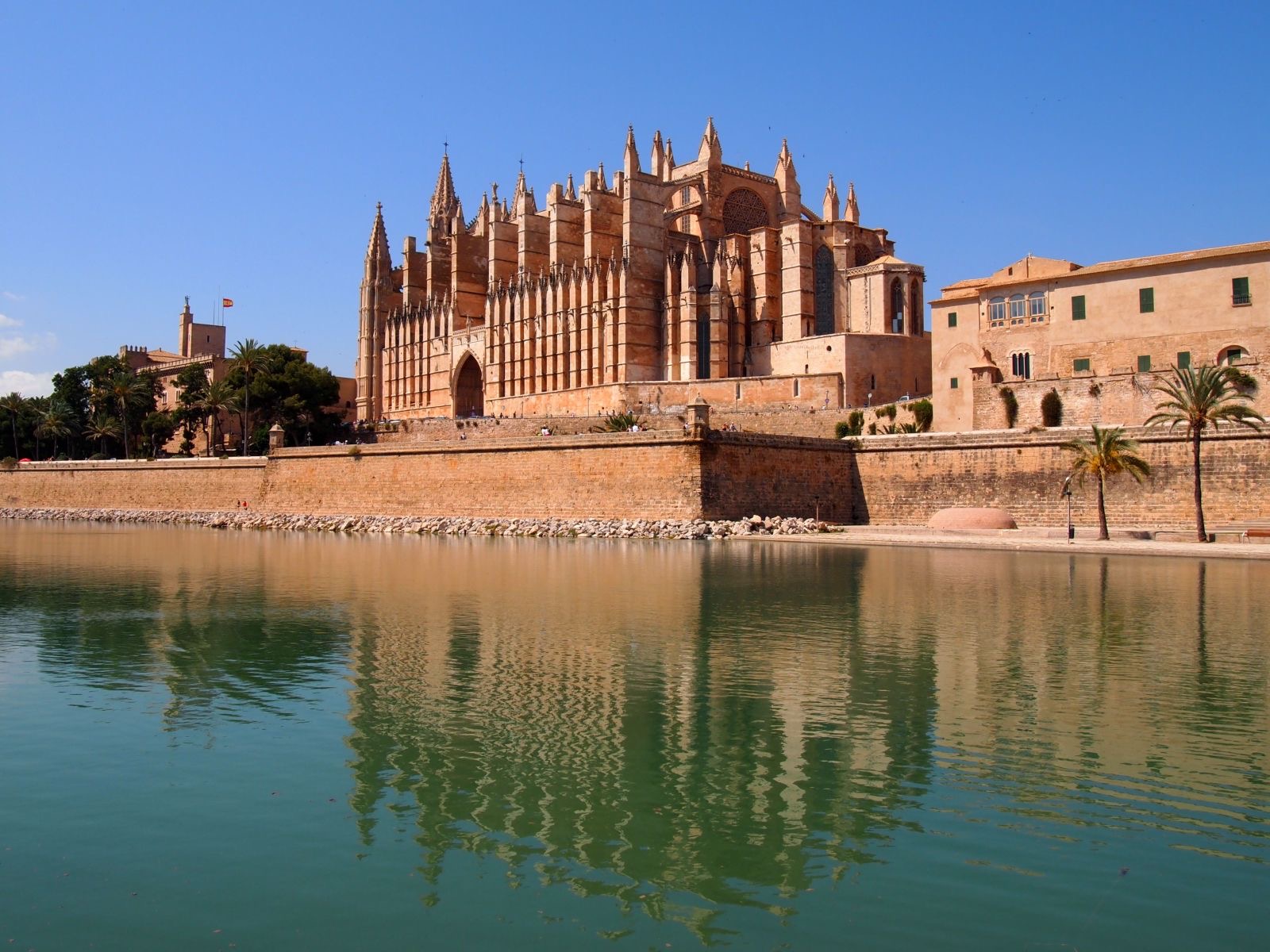
The sea is part of everyday life. A promenade and cycle path follow the shore east from the cathedral past Can Pere Antoni, Portixol, El Molinar and Ciutat Jardí to the long sandy beach of Playa de Palma. Besides the Real Club Náutico and Club de Mar in the port, there are marinas at Calanova to the west and at Portixol, Cala Gamba and Can Pastilla to the east, and golfers have three courses at Son Vida and another at Son Gual. Bellver’s pine woods, the Na Burguesa ridge and the council-owned Son Quint estate give the western barris a green edge.
Who buys here
Palma is above all a city of year-round residents, and many barris, such as La Vileta, Son Rapinya and the Pla de Sant Jordi villages, remain mainly local. Foreign buyers are most visible in a few areas: Nordic buyers in the old town and Santa Catalina, Germans along the eastern seafront in Portixol, El Molinar and Ciutat Jardí and, more recently, in Pere Garau, and international families near the British schools in the west. In the old town many flats are second homes used only part of the year.
Property
Flats are the norm. The old town, a protected historic ensemble since 1964, has flats in old townhouses and former palaces, while Santa Catalina and Son Espanyolet are mostly low-rise, with older houses and roof terraces. Apartment blocks from the mid-20th century onwards line the Paseo Marítimo and much of the shore at Portopí, Sant Agustí, Ciutat Jardí and Can Pastilla, Portixol and El Molinar keep low seafront houses, and Nou Llevant adds new towers with communal pools. Detached villas fill Son Vida and upper La Bonanova, Son Rapinya is mainly family houses, and the northern villages and the Pla de Sant Jordi have village houses and country properties.
Getting around
Approximate times by car, outside rush hour, from the nearest and furthest parts of Palma.
- 10–25min
Palma CathedralOn foot from the old town; by car about 10 from Santa Catalina and Nou Llevant, 15 to 20 from Son Vida and Son Rapinya, about 20 from Can Pastilla and Son Ferriol, 25 from Sant Jordi
- 10–25min
Palma airport10 to 15 from Can Pastilla, about 15 from the eastern seafront and the Pla de Sant Jordi, 20 to 25 from the western and northern barris
- 5–20min
Son Espases hospitalThe islands' main public hospital: 5 to 10 from Son Sardina, about 15 from the old town, up to 20 from the east; Son Llàtzer is the hospital for much of the east
- 10–30min
Puerto PortalsMarina in Calvià, along the Ma-1: 10 to 15 from Sant Agustí and La Bonanova, 15 to 20 from the old town, 25 to 30 from Can Pastilla and Sant Jordi
- 20–35min
ValldemossaInto the Tramuntana on the Ma-1110: 20 to 25 from Son Sardina, 25 to 30 from the old town, about 35 from Sant Jordi
How Palma breaks down
-
The old town inside the avenues, a protected historic ensemble since 1964: flats in old townhouses and former palaces, many lanes open only to residents' cars, and everything on foot. La Lonja is one of the city’s main nightlife areas, Sa Calatrava a quiet corner by the old walls, and Old Town North has the Olivar market and the station.
-
West along the harbour: Santa Catalina’s market streets and low townhouses, harbour-view flats on the Paseo Marítimo, El Terreno’s steep streets below Bellver, then Portopí, Cala Major and Sant Agustí towards Calvià, with a small beach and marinas. Year-round city life, 10 to 20 minutes from the cathedral.
-
The green, hilly west: La Bonanova and Gènova, with villas and flats looking over the bay and Queen’s College on the hill, and Son Vida, a wooded estate of large villas around three golf courses, with private security on its main access road. Quiet, private and car-dependent.
-
Inland residential barris with no beach: Son Espanyolet’s low houses with patios near Santa Catalina, Son Rapinya’s family houses in the school zone, and La Vileta’s mix of houses and flats near Green Valley School and the ring road. The cathedral is 10 to 20 minutes away by car.
-
Everyday Palma to the north: dense barris of flats with shops, schools and health centres around Plaça de Toros and Bons Aires, then, beyond the ring road, the old villages of Son Sardina and Establiments, with houses and country properties, an M1 metro stop at Son Sardina and Son Espases hospital a few minutes away.
-
East of the old town: Nou Llevant’s new apartment towers with communal pools beside older blocks, about 15 minutes' walk from the beach, and the dense, mixed barris around the Pere Garau market, mostly older flats, with real problems in parts of Son Gotleu.
-
The eastern seafront and the plain behind: the low houses of Portixol and El Molinar on the promenade, Ciutat Jardí’s town beach, Can Pastilla at the start of Playa de Palma, and the farming villages of the Pla de Sant Jordi. The airport lies on the plain, and Coll d’en Rabassa, Can Pastilla and Sant Jordi live with aircraft noise.
Pros and cons
For
- A working capital, busy all year, with markets, culture and shops
- Airport 10 to 25 minutes away; two large public hospitals
- Town beaches, a seafront promenade and cycle path, several marinas
- British, Swedish and German schools; metro, trains and city buses
- Everything from old-town flats to villas and village houses
Against
- Old-town crowds, at their worst when cruise ships are in
- Late-night bar noise in La Lonja and Santa Catalina
- Aircraft noise in Coll d’en Rabassa, Can Pastilla and Sant Jordi
- Scarce parking, and resident-only lanes in the old town
- No new holiday-rental licences, in flats or, since 2026, houses
Questions buyers ask
Which areas does the Palma zone cover?
The whole municipality of Palma, which this site splits into 22 areas, from the old town to the Pla de Sant Jordi villages around the airport. Two places often thought of as Palma are covered elsewhere: Illetes, just past Sant Agustí, is in Calvià and covered under the Southwest, and s’Arenal, at the far end of Playa de Palma, is split between Palma and Llucmajor and covered under the South.
Where should I look for a house with a garden?
Son Vida for large villas on big plots, La Bonanova and Gènova for hillside homes with bay views, and Son Rapinya and La Vileta for family houses near schools. Son Sardina, Establiments and the Pla de Sant Jordi have village houses and country properties. Near the sea, the streets towards Cala Gamba have older houses with gardens.
Do I need a car in Palma?
Not in the old town and the inner barris, where markets, shops, buses and the trains and metro at Plaça d’Espanya are within walking distance, and driving is restricted anyway. In Son Vida, the hill barris of the west and the villages of the north and east, a car makes daily life much easier.
Where are the beaches?
Mostly on the eastern seafront: Can Pere Antoni, about 20 minutes' walk east of the cathedral, the small cove of Es Portitxolet, Ciutat Jardí and the 4.5 km of Playa de Palma from Can Pastilla to s’Arenal. To the west, Cala Major has a small sandy beach. Inland barris such as La Vileta, Son Vida and Son Sardina are 10 to 15 minutes' drive from the nearest sand.
Can I let a property to holidaymakers in Palma?
Only if it already has a legal licence. Palma has banned holiday lets in apartment buildings since 2018, a rule Spain’s Supreme Court upheld in 2023, and in May 2026 the council gave final approval to banning new holiday-rental places in houses too. Buy here to live in or to let long term.