- Speaks
- Spanish, English, French
- Specialises in
- Luxury, Apartments
- Website
- inmo-bienvenue.com
Estate agents in Cathedral & Calatrava
222 agencies, listed in three groups: office in Cathedral & Calatrava first, then offices nearby, then others. How we list agents
Palma · Old town · In Palma’s old town, by the cathedral
Showing all 222 agenciesOrder: office in the place first
1
3 agencies
Office in Cathedral & Calatrava
A shopfront in Cathedral & Calatrava itself.
- Speaks
- Spanish
- Specialises in
- Apartments
- Website
- collaguilar.com
- Speaks
- Spanish, English, German
- Specialises in
- Fincas, Village houses, Luxury
- Website
- medina-mallorca.com
2
182 agencies
Offices nearby that cover Cathedral & Calatrava
Based elsewhere in Palma, working in Cathedral & Calatrava. Nearest first.
- Speaks
- Spanish, Catalan, English
- Specialises in
- Apartments
- Website
- talaiotinmobiliaria.com
- Speaks
- Spanish, English, French, Swedish
- Specialises in
- Apartments
- Website
- fincascalamajor.com
- Speaks
- English, German, Spanish
- Specialises in
- Luxury, Apartments, Villas
- Website
- ocean-seven.com
- Speaks
- German, English, Spanish
- Specialises in
- Villas, Apartments
- Website
- edelhof.com
- Speaks
- Spanish
- Specialises in
- Apartments
- Website
- inmobiliariapalma.com
- Speaks
- English, Swedish
- Specialises in
- Luxury, Villas
- Website
- homerunmallorca.com
- Speaks
- Spanish
- Specialises in
- Apartments, Luxury
- Website
- housingp.com
- Speaks
- Spanish, Catalan, English
- Specialises in
- Apartments
- Website
- inmobiliariaoliver.com
- Speaks
- German, English, Spanish
- Specialises in
- Villas, Apartments
- Website
- kunze-partner.com
- Speaks
- Spanish, English, German
- Specialises in
- Apartments
- Website
- napporealestate.com
- Speaks
- English, Swedish, Spanish
- Specialises in
- Luxury, Apartments, Villas
- Website
- palmamarkets.com
- Speaks
- Spanish
- Specialises in
- Apartments
- Website
- remaximmocorner.com
- Speaks
- German, Russian, English, Spanish
- Specialises in
- Apartments
- Website
- redhawk-realestate.com
- Speaks
- English, German, Spanish
- Specialises in
- Luxury, Villas, Apartments
- Website
- sae-mallorca.com
- Speaks
- English, Spanish, Finnish, Swedish
- Specialises in
- Luxury, Apartments, Villas
- Website
- strandproperties.com
- Speaks
- Spanish
- Specialises in
- Apartments
- Website
- fincastorrens.com
- Speaks
- English, German, Spanish, Russian, Swedish
- Specialises in
- Luxury, Villas
- Website
- firstmallorca.com
- Speaks
- Spanish, English, German
- Specialises in
- Apartments
- Website
- inmovisa.com
- Speaks
- Spanish, English, German
- Specialises in
- Apartments, New builds
- Website
- palmerinmobiliaria.com
- Speaks
- English, Norwegian, Spanish, German
- Specialises in
- Apartments, Villas
- Website
- ellimon.com
- Speaks
- Spanish, English
- Specialises in
- Apartments
- Website
- mundopisos.com
- Speaks
- English, German, Spanish, Russian, French, Dutch, Swedish, Polish
- Specialises in
- Villas, Fincas, Apartments
- Website
- portamallorquina.com
- Speaks
- Spanish
- Specialises in
- Apartments, Fincas
- Website
- grupdirect.com
- Speaks
- Spanish, English
- Specialises in
- Apartments
- Website
- living-palma.com
- Speaks
- Spanish, Catalan, English, German, Russian
- Specialises in
- Apartments
- Website
- viviendasmria.com
- Speaks
- English, German, Spanish, French
- Specialises in
- Luxury, Villas
- Website
- john-taylor.com
- Speaks
- Spanish
- Specialises in
- Apartments, Fincas
- Website
- a8inmobiliaria.com
- Speaks
- Spanish
- Specialises in
- Apartments
- Website
- afripayinmobiliaria.com
- Speaks
- Spanish, Catalan, English, French, German
- Specialises in
- Apartments, Villas
- Website
- aproperties.es
- Speaks
- Spanish
- Specialises in
- Villas
- Website
- atrioinmobiliaria.com
- Speaks
- Spanish, English, German
- Specialises in
- Luxury, Villas, Apartments
- Website
- balearhouse.com
- Speaks
- English, Spanish, German, Swedish, French
- Specialises in
- Luxury, Villas, Apartments
- Website
- balearicblue.com
- Speaks
- English, Spanish, French, Swedish, Portuguese, Italian
- Specialises in
- Luxury, Villas, Apartments
- Website
- barnes-international.com
- Speaks
- Spanish
- Specialises in
- Apartments, Villas
- Website
- bauzainmobiliaria.com
- Speaks
- German, English, Spanish
- Specialises in
- Villas, Apartments
- Website
- bbi-mallorca.com
- Speaks
- English, Spanish, German, Swedish, French, Dutch, Catalan
- Specialises in
- Luxury, Villas
- Website
- bhhsspain.com
- Speaks
- English, Swedish, Spanish
- Specialises in
- Villas, Apartments
- Website
- bjurfors.se
- Speaks
- Spanish, English, German, French, Italian, Swedish, Arabic
- Specialises in
- Luxury, Fincas
- Website
- bonafinca.com
- Speaks
- Spanish, English
- Specialises in
- Apartments, Luxury
- Website
- brokersmallorca.com
- Speaks
- Spanish
- Specialises in
- Apartments
- Website
- cbpisos.com
- Speaks
- Spanish, English, German
- Specialises in
- Apartments
- Website
- cocoinmobiliaria.com
- Speaks
- Spanish, English, German, Catalan
- Specialises in
- Apartments, Villas
- Website
- coolhomesmallorca.com
- Speaks
- German, English, Spanish
- Specialises in
- Luxury, Villas, Fincas
- Website
- dahlercompany.com
- Speaks
- Spanish
- Specialises in
- Apartments, Village houses
- Speaks
- Spanish, English
- Specialises in
- Luxury
- Website
- daviniacaldes.com
- Speaks
- English, Spanish
- Specialises in
- Apartments, Luxury, New builds
- Website
- lucasfox.com
- Speaks
- Spanish, French, English, German
- Specialises in
- Apartments, Villas
- Speaks
- Spanish, English, German
- Specialises in
- Villas, Apartments
- Website
- domo-plan.com
- Speaks
- Spanish, English, German, Catalan, Swedish, Italian, Chinese
- Specialises in
- Apartments, Luxury
- Website
- engelvoelkers.com
- Speaks
- English, Spanish
- Specialises in
- Apartments, Villas
- Website
- fantasticfrank.com
- Speaks
- Swedish, English, Spanish
- Specialises in
- Apartments, Villas
- Website
- fastighetsbyran.com
- Speaks
- Spanish
- Specialises in
- Apartments, Villas
- Website
- fincasferre.com
- Speaks
- Spanish
- Specialises in
- Apartments
- Website
- fincasfiol.com
- Speaks
- English
- Specialises in
- Luxury, Villas, Apartments
- Website
- fischerprime.com
- Speaks
- Spanish, English, German
- Specialises in
- Apartments
- Website
- gestpropiedad.com
- Speaks
- Spanish
- Specialises in
- Apartments
- Website
- ilfinmobiliaria.com
- Speaks
- Spanish
- Specialises in
- Apartments
- Website
- inmorentcb.com
- Speaks
- Spanish
- Specialises in
- Apartments
- Website
- inmobiliariabph.com
- Speaks
- Spanish
- Specialises in
- Villas, Fincas
- Website
- estarellasbroker.com
- Speaks
- Spanish
- Specialises in
- Villas, Fincas, Apartments
- Website
- sescorxador.com
- Speaks
- Spanish
- Specialises in
- Apartments
- Website
- inmodela.com
- Speaks
- Spanish
- Specialises in
- Apartments
- Website
- inmogestionbalear.com
- Speaks
- Spanish, English
- Specialises in
- Apartments
- Website
- intiaa.com
- Speaks
- Spanish, English, German, Russian
- Specialises in
- Apartments, Villas
- Website
- jd-residences.com
- Speaks
- German, English, Spanish
- Specialises in
- Villas, Fincas, Luxury
- Website
- kensington-international.com
- Speaks
- English, Spanish
- Specialises in
- Apartments
- Website
- kingsberproperty.com
- Speaks
- German, English, Spanish, French
- Specialises in
- Luxury, Villas, Apartments
- Website
- krohnluedemann.com
- Speaks
- Spanish
- Specialises in
- Apartments
- Website
- lginmobiliaria.es
- Speaks
- Spanish, English
- Specialises in
- Apartments, New builds
- Website
- laboutiqueinmobiliaria.com
- Speaks
- Spanish, English, German, French
- Specialises in
- Fincas, Village houses, New builds
- Website
- livingblue-mallorca.com
- Speaks
- Spanish
- Specialises in
- Apartments
- Website
- lorecasa.com
- Speaks
- Spanish, English
- Specialises in
- Apartments
- Website
- maberty.com
- Speaks
- Swedish, English, Spanish
- Specialises in
- Apartments, Villas
- Website
- mallorcabyran.se
- Speaks
- German, English, Spanish
- Specialises in
- Apartments
- Website
- mayfair-mallorca.com
- Speaks
- Spanish
- Specialises in
- Apartments
- Website
- mgrasesores.com
- Speaks
- Spanish, English, German, French
- Specialises in
- Apartments
- Website
- morcas.com
- Speaks
- English
- Specialises in
- Luxury
- Website
- nestseekers.com
- Speaks
- Spanish
- Specialises in
- Apartments
- Website
- oriahome.es
- Speaks
- Spanish
- Specialises in
- Apartments
- Website
- pypinmobiliaria.es
- Speaks
- Spanish
- Specialises in
- Apartments
- Website
- palmarealtor.com
- Speaks
- Spanish
- Specialises in
- Apartments
- Website
- palmacasa.es
- Speaks
- Spanish, English
- Specialises in
- Apartments
- Website
- pisosmallorca.com
- Speaks
- Spanish
- Specialises in
- Apartments
- Website
- pradainmogestion.com
- Speaks
- Spanish
- Specialises in
- Villas, Fincas, New builds
- Website
- redpremium.es
- Speaks
- Spanish
- Specialises in
- Apartments
- Website
- inmo83.com
- Speaks
- Spanish, English, German
- Specialises in
- Fincas
- Website
- rusticamallorca.com
- Speaks
- Spanish, English, German
- Specialises in
- Apartments, Luxury
- Website
- smarthomemallorca.com
- Speaks
- English, German
- Specialises in
- Villas, Fincas
- Website
- soul-homes.com
- Speaks
- English, Spanish, German, French, Italian, Dutch, Russian, Catalan, Polish, Portuguese
- Specialises in
- Luxury, Villas
- Website
- spain-sothebysrealty.com
- Speaks
- German, English, Spanish
- Specialises in
- Villas, Apartments
- Website
- steinhomes.es
- Speaks
- Spanish
- Specialises in
- Apartments
- Website
- suksa.es
- Speaks
- English, German, Dutch, Swedish, Spanish, Catalan, Italian, French
- Specialises in
- Luxury, Villas
- Website
- theagencyre-mallorca.com
- Speaks
- Swedish, English, Spanish, German, Danish, Norwegian, Finnish, Catalan, Italian
- Specialises in
- Apartments
- Website
- bo-mallorca.com
- Speaks
- English, Swedish, German, Spanish
- Specialises in
- Apartments, Villas
- Website
- buyahomemallorca.com
- Speaks
- German, English, Spanish
- Specialises in
- Fincas
- Website
- mallorcafincavianden.com
- Speaks
- Spanish
- Specialises in
- Apartments
- Website
- viviendasjosegomez.es
- Speaks
- Spanish
- Specialises in
- Villas, Apartments
- Website
- zainoscapital.com
- Speaks
- Spanish, English, German, French
- Specialises in
- Apartments
- Website
- balearinvest.com
- Speaks
- Spanish
- Specialises in
- Fincas
- Website
- mallorcahouse.com
- Speaks
- Spanish
- Specialises in
- Apartments
- Website
- uccsl.com
- Speaks
- Spanish, English, German
- Specialises in
- Apartments, Villas
- Website
- mogohomes.com
- Speaks
- Spanish
- Specialises in
- Apartments
- Website
- alexmarroig.com
- Speaks
- Spanish
- Specialises in
- Apartments
- Website
- aragongestion.com
- Speaks
- German, English, Spanish
- Specialises in
- Luxury, Apartments, Villas
- Website
- arxie.es
- Speaks
- Spanish
- Specialises in
- Apartments
- Website
- asymasinmobiliaria.com
- Speaks
- Spanish, Catalan, English, German
- Specialises in
- Apartments
- Website
- cervantesinmobiliaria.com
- Speaks
- Spanish
- Specialises in
- Apartments
- Website
- enhabitat.com
- Speaks
- Spanish
- Specialises in
- Apartments
- Website
- fincasribo.com
- Speaks
- Spanish
- Specialises in
- Apartments, Villas
- Website
- inmobiliariamutbymarian.es
- Speaks
- Spanish
- Specialises in
- Apartments
- Website
- inmourban.com
- Speaks
- Spanish
- Specialises in
- Village houses, Fincas
- Website
- inmo-irs.com
- Speaks
- English, German, Spanish
- Specialises in
- Luxury, Villas
- Website
- javierjames.com
- Speaks
- Spanish
- Specialises in
- Apartments
- Website
- mallorcadh.com
- Speaks
- Spanish
- Specialises in
- Apartments
- Website
- masterdegestion.net
- Speaks
- Spanish, English, German
- Specialises in
- Apartments, Villas
- Website
- mvc-properties.com
- Speaks
- Spanish
- Specialises in
- Apartments
- Website
- nexeimmo.com
- Speaks
- Spanish
- Specialises in
- Apartments
- Speaks
- Spanish
- Specialises in
- Apartments
- Website
- remax.es
- Speaks
- English, Spanish, German, Swedish, French, Russian
- Specialises in
- Luxury, Villas, Apartments
- Website
- sandberg-estates.com
- Speaks
- English, Spanish
- Specialises in
- Apartments
- Website
- santacatalinaproperties.com
- Speaks
- Spanish
- Specialises in
- Apartments
- Website
- sis-inmobiliaria.es
- Speaks
- Swedish, English, Spanish, German
- Specialises in
- Apartments, Villas
- Website
- skandiamaklarna.com
- Speaks
- English, Spanish
- Specialises in
- Apartments
- Website
- soonmallorca.com
- Speaks
- Swedish, English
- Specialises in
- Apartments, Villas
- Website
- svenskfast.se
- Speaks
- German, English, Spanish
- Specialises in
- Apartments
- Website
- synergymallorca.com
- Speaks
- Spanish
- Specialises in
- Apartments, Villas
- Website
- villainvest.es
- Speaks
- Spanish, Catalan, English
- Specialises in
- Apartments
- Website
- durendesa.com
- Speaks
- Spanish, English, German
- Specialises in
- Luxury, Villas, Apartments
- Website
- elevenhomes.com
- Speaks
- German, English, Spanish
- Specialises in
- Villas, Apartments
- Website
- mayer-dau.es
- Speaks
- Spanish
- Specialises in
- Apartments
- Website
- novamig.com
- Speaks
- Spanish
- Specialises in
- Apartments
- Website
- olivermateu.com
- Speaks
- Spanish, English, German, Swedish
- Specialises in
- Apartments, Villas
- Website
- taylorbuilding.es
- Speaks
- English, German, Spanish, Catalan, French, Italian, Russian, Swedish
- Specialises in
- Luxury, Villas
- Website
- engelvoelkers.com
- Speaks
- English
- Specialises in
- Apartments
- Website
- w-mallorcainvest.com
- Speaks
- Spanish
- Specialises in
- Apartments
- Website
- algoritmoinmobiliaria.com
- Speaks
- Spanish
- Specialises in
- Fincas, Villas
- Website
- laposesionmallorquina.com
- Speaks
- German
- Specialises in
- New builds, Villas
- Website
- swiftbalear.com
- Speaks
- Spanish, English, German
- Specialises in
- Villas, Fincas, Apartments
- Website
- filmhouses.com
- Speaks
- English, Swedish, French, Spanish, German
- Specialises in
- Apartments, Villas
- Website
- mallorcahem.com
- Speaks
- Spanish
- Specialises in
- Apartments
- Website
- vidamar.net
- Speaks
- German, English, Spanish, Swedish
- Specialises in
- Luxury, Villas
- Website
- luxuryonmallorca.com
- Speaks
- Spanish
- Specialises in
- Apartments
- Website
- 5islas.es
- Speaks
- English, German, Spanish, French, Polish, Russian, Swedish
- Specialises in
- New builds, Villas
- Website
- cjrealestate.eu
- Speaks
- Spanish, English
- Specialises in
- Apartments
- Website
- compropiedad.com
- Speaks
- Spanish
- Specialises in
- Apartments
- Website
- easyhomes.es
- Speaks
- Spanish
- Specialises in
- Apartments
- Speaks
- Spanish
- Specialises in
- Apartments
- Website
- gtevez.com
- Speaks
- Spanish, English, German
- Specialises in
- Apartments
- Website
- grupo-roma.com
- Speaks
- Spanish
- Specialises in
- Apartments
- Website
- inmobiliariavivancos.com
- Speaks
- Spanish, Catalan, English, German
- Specialises in
- Apartments, Villas
- Website
- inmodomum.com
- Speaks
- Spanish
- Specialises in
- Village houses, Apartments
- Website
- inmorange.com
- Speaks
- Spanish, English
- Specialises in
- Villas, Luxury
- Website
- inmovita.es
- Speaks
- Spanish, German, English, Russian
- Specialises in
- Apartments, Villas
- Website
- keystonemallorca.com
- Speaks
- Spanish, English
- Specialises in
- Villas, Fincas, Apartments
- Website
- mallorcasa.es
- Speaks
- Spanish, English
- Specialises in
- Apartments
- Website
- mamainmobiliaria.com
- Speaks
- Spanish
- Specialises in
- Apartments
- Website
- nn-realestate.com
- Speaks
- Spanish
- Specialises in
- Apartments
- Website
- palmapisos.net
- Speaks
- English, Spanish, German, French
- Specialises in
- Villas, Fincas
- Website
- pollentiaproperties.com
- Speaks
- Spanish, English, German, French, Italian, Swedish
- Specialises in
- Apartments, Villas
- Website
- puroestate.com
- Speaks
- Spanish
- Specialises in
- Apartments
- Website
- queenmallorca.es
- Speaks
- Spanish
- Specialises in
- Apartments
- Website
- remaxmagic.es
- Speaks
- Spanish
- Specialises in
- Apartments
- Website
- inmosenna.com
- Speaks
- German, English, Spanish
- Specialises in
- Luxury, Villas
- Website
- smartestatesmallorca.com
- Speaks
- German, English, Spanish
- Specialises in
- Luxury, Villas
- Website
- marcelremusrealestate.com
- Speaks
- Spanish, English, German
- Specialises in
- Apartments, Villas, Fincas
- Website
- depradamoya-realestate.com
- Speaks
- Spanish
- Specialises in
- Apartments
- Website
- fincasmolina.com
- Speaks
- Spanish, English, German
- Specialises in
- Apartments
- Website
- finquesrbj.com
- Speaks
- Spanish
- Specialises in
- Apartments
- Website
- mendopiso.es
- Speaks
- Spanish
- Specialises in
- Apartments
- Website
- remaxroyal.es
- Speaks
- German, English, Spanish
- Specialises in
- Villas, Apartments, Luxury
- Website
- minkner.com
- Speaks
- Spanish
- Specialises in
- Apartments
- Website
- inmobiliariamir.es
- Speaks
- English, Spanish
- Specialises in
- Apartments
- Website
- molierestates.com
- Speaks
- Spanish, German, English
- Specialises in
- Luxury, Apartments
- Website
- ksa-estates.com
- Speaks
- English, German, Spanish
- Specialises in
- Villas, Apartments
- Website
- falcrealestate.com
- Speaks
- German, English, Spanish
- Specialises in
- Fincas, Villas
- Website
- inm-mallorca.com
- Speaks
- Spanish, French, German, English
- Specialises in
- Apartments
- Website
- inmocanpastilla.com
- Speaks
- German, English, Spanish
- Specialises in
- Luxury, Villas
- Website
- villa-kaufen-mallorca.com
- Speaks
- Spanish, English, German, Italian
- Specialises in
- Apartments, Villas
- Website
- realestatebalear.com
- Speaks
- Spanish
- Specialises in
- Apartments
- Website
- siminmobiliaria.es
- Speaks
- Spanish
- Specialises in
- Fincas
- Website
- grupjm.es
- Speaks
- Spanish
- Specialises in
- Apartments
- Website
- inmopropiedad.com
- Speaks
- Spanish
- Specialises in
- Apartments, New builds
- Website
- labproperties.es
3
37 agencies
Other agents covering Cathedral & Calatrava
Island-wide agencies and agencies based elsewhere. Nearest first.
- Speaks
- Spanish, English
- Specialises in
- Apartments, Villas
- Website
- az-inmobiliaria.com
- Speaks
- Spanish
- Specialises in
- Apartments, Villas
- Website
- mallorcagestion.com
- Speaks
- Spanish
- Specialises in
- Apartments
- Website
- mia-inmobiliaria.com
- Speaks
- German, English, Spanish
- Specialises in
- Luxury, Villas
- Website
- mallorcaagent.com
- Speaks
- Spanish, English
- Specialises in
- Apartments, Villas
- Website
- didac.eu
- Speaks
- Swedish, English, Spanish, German
- Specialises in
- Luxury, New builds, Villas
- Website
- reiderstadinvest.com
- Speaks
- German, English, Spanish
- Specialises in
- Apartments, Villas
- Website
- herden-immobilien.com
- Speaks
- Spanish, English
- Specialises in
- Fincas, Apartments
- Website
- delmargroup.es
- Speaks
- Spanish, English, German
- Specialises in
- Apartments
- Website
- toppmallorca.com
- Speaks
- Spanish
- Specialises in
- Apartments
- Website
- tresidence.es
- Speaks
- Spanish, English
- Specialises in
- Villas, Apartments
- Website
- gruprebassa.com
- Speaks
- English, Spanish, German
- Specialises in
- Luxury, Villas
- Website
- bconnectedmallorca.com
- Speaks
- German, English, Spanish
- Specialises in
- Luxury, Villas, Apartments
- Website
- fraeuleinfritzrealestate.com
- Speaks
- English, German, Spanish
- Specialises in
- Villas, Apartments
- Website
- heritagehomesmallorca.com
- Speaks
- English, Spanish, German
- Specialises in
- Villas, Fincas, Apartments
- Website
- balearic-properties.com
- Speaks
- Spanish
- Specialises in
- Apartments
- Website
- realestateinfocasa.com
- Speaks
- Spanish, English, German
- Specialises in
- Apartments, Villas
- Website
- mallorcahabitat.es
- Speaks
- Spanish
- Specialises in
- Apartments, New builds
- Website
- habitatgesmallorquins.com
- Speaks
- Spanish
- Specialises in
- Apartments
- Website
- mallorcasolproperties.com
- Speaks
- German, English, Spanish
- Specialises in
- Luxury, Villas
- Website
- privatehideaway.com
- Speaks
- German, English
- Specialises in
- Villas, Luxury
- Website
- firstclass-estate.com
- Speaks
- German, English, Spanish, Catalan
- Specialises in
- Villas, Apartments, Fincas
- Website
- puravida-estate.com
- Speaks
- German
- Specialises in
- Villas, Apartments
- Website
- sgi-mallorca.com
- Speaks
- German, English, Spanish
- Specialises in
- Luxury, Villas
- Website
- herzog-mallorca.com
- Speaks
- German, English, Spanish
- Specialises in
- Apartments, Villas, Fincas
- Website
- smartlivingmallorca.com
- Speaks
- English, Spanish, German
- Specialises in
- Villas, Apartments
- Website
- firstinvestmallorca.com
- Speaks
- Spanish
- Specialises in
- Apartments
- Website
- focus-real-estate.com
- Speaks
- English, Spanish, German
- Specialises in
- Luxury, Villas
- Website
- onestop.world
- Speaks
- Spanish
- Specialises in
- Apartments, Village houses
- Website
- inmovyp.es
- Speaks
- Spanish, English, German
- Specialises in
- Villas, Apartments, Fincas
- Website
- nicolasmessias.com
- Speaks
- Spanish, English, German
- Specialises in
- Villas, Fincas, Apartments
- Website
- villasyfincasmallorca.com
- Speaks
- Spanish, English, German
- Specialises in
- New builds, Apartments
- Website
- gregalproperties.com
- Speaks
- German, English, Spanish
- Specialises in
- Fincas, New builds, Villas
- Website
- ywc-realestate.com
- Speaks
- English, Spanish, German
- Specialises in
- Villas, Fincas
- Website
- villasplanet.com
- Speaks
- English, Spanish, German
- Specialises in
- Luxury, Fincas, Villas
- Speaks
- Spanish, English, German
- Specialises in
- Luxury, Villas, Fincas
- Website
- nofreplomerpremium.com
- Speaks
- German, English, Spanish, French
- Specialises in
- Apartments, Villas
- Website
- huether-partner-mallorca.de
Featured agents pay to appear first in their group and are always labelled. How we list agents →
No agencies here match those filters.
Living here
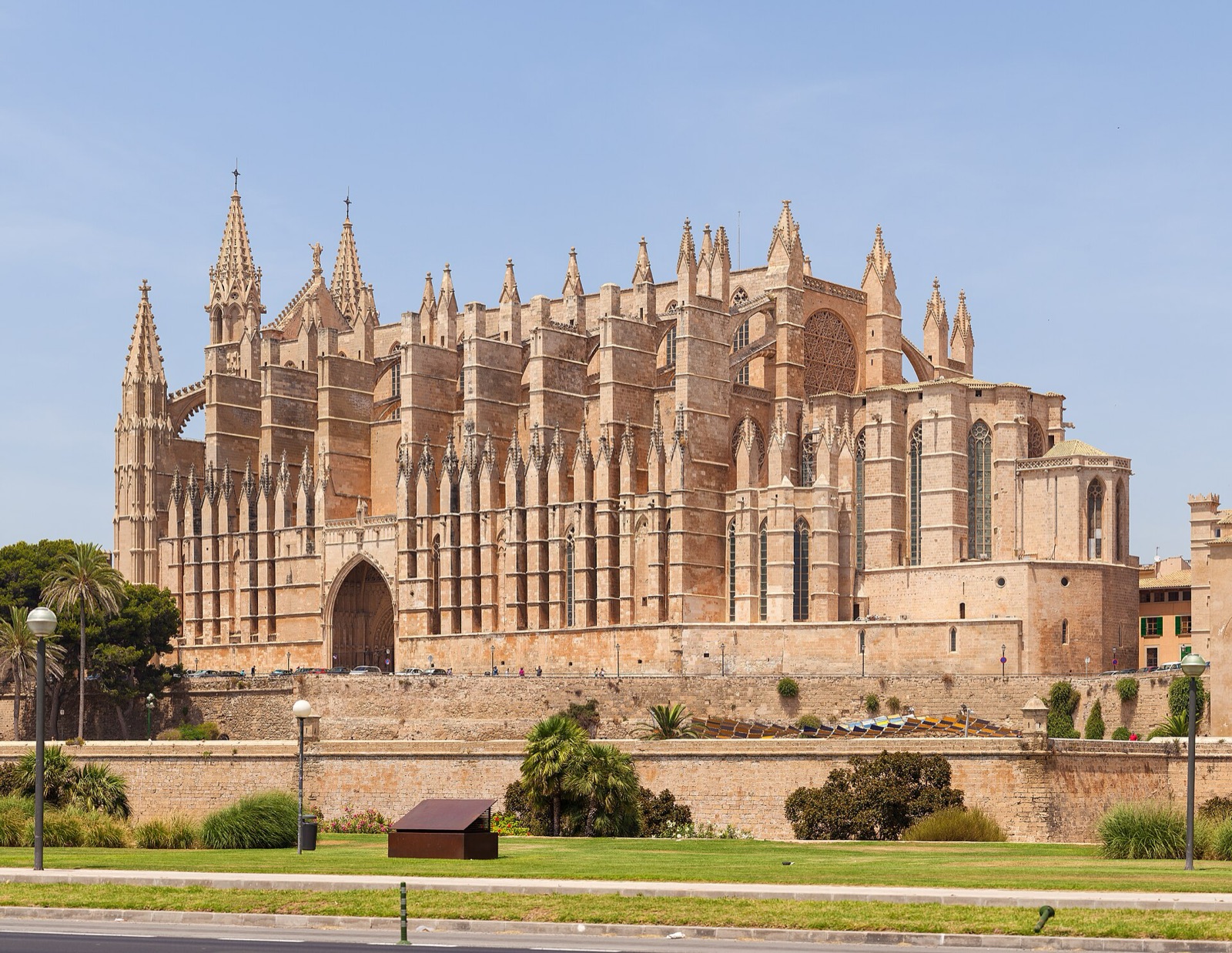
Cathedral & Calatrava is the seaward side of Palma’s old town, running from the cathedral and the Almudaina palace east along the old sea walls to the quiet lanes of Sa Calatrava, and north to the town hall on Plaça de Cort. It fits buyers who want a historic flat and are happy to go everywhere on foot, as cars are kept out of most of its streets.
The area takes in four official Palma barris: La Seu, Cort, Monti-sion and Sa Calatrava. By day the streets around the cathedral and Plaça de Cort are among the busiest in the city, full of visitors heading for the main sights. A few minutes east, Monti-sion and Sa Calatrava feel very different, with narrow, quiet lanes, plain doorways hiding courtyards and very little traffic. Along the seaward edge runs the old city wall, now a promenade, looking down over Parc de la Mar and the bay.
The Gothic cathedral, La Seu, has an interior reworked by Antoni Gaudí in the early 1900s and a chapel redesigned by Miquel Barceló. On 2 February and 11 November the morning sun throws the image of its great rose window onto the wall opposite. Facing it is the Almudaina, a former Moorish fortress that is now an official royal residence. Between the cathedral and Sa Calatrava are the Arab Baths, one of the few Moorish buildings left on the island, and the Museu de Mallorca, housed in a noble mansion. Monti-sion was the medieval Jewish quarter; its Jesuit church stands on the site of the main synagogue.
Sa Calatrava has lost many of its local shops, and in 2026 a resident told the local press that buying bread or visiting a pharmacy now means a walk to Sa Gerreria or Porta de Sant Antoni. What is left nearby is mostly minimarkets aimed at visitors. The covered Mercat de l’Olivar food market is 10 to 15 minutes on foot, and Plaça d’Espanya, where trains and island buses leave and the airport bus stops, is 15 to 20 minutes. Son Espases hospital is about 15 minutes by car.
Many homes in Sa Calatrava belong to owners who come for only part of the year, so some shutters stay closed for long stretches. The cathedral area is at its busiest in the warmer months, and more so on days when several cruise ships are in port. For fresh air, Parc de la Mar lies just below the walls, its lake reflecting the cathedral, and a seafront path for walking and cycling leads east to Can Pere Antoni beach and on to Portixol and El Molinar.
Who buys here
Local press reports that many owners in Sa Calatrava are foreign, mostly from elsewhere in Europe and increasingly from Scandinavia, and that many use their homes for short stays rather than living here all year. Long-standing Mallorcan residents have become fewer as the area was restored, and fewer and fewer children grow up here. Couples and singles who enjoy city life are the most natural fit.
Property
Homes are mostly in historic buildings. Some former noble houses built around courtyards have been split into flats, and others have become hotels. Sa Calatrava was run down until council rehabilitation plans in the 1980s began a long renewal, and many buildings have since been fully renovated. Today traditional homes sit beside luxury ones, and building works are common. A few houses have gardens along the old city wall. Like the rest of the old town, the area has been a protected historic ensemble since 1964, and some buildings, such as the Monti-sion church and school, carry their own protection, so renovation plans are tightly controlled.
Getting around
Approximate times by car, outside rush hour.
- 15min
Palma airportAbout 10 km, mostly on the Ma-19 motorway
- 15min
Son Espases University HospitalThe Balearics' main public hospital
- 10–15min
Cala MajorWest via the Ma-20 ring road or the seafront
- 30min
ValldemossaMountain village, up the Ma-1110
- 30–35min
Port d’AndratxWest on the Ma-20 and Ma-1 motorways
Pros and cons
For
- Live beside the cathedral, the sea walls and Parc de la Mar
- All of central Palma within walking distance
- Quiet stone lanes in Sa Calatrava and Monti-sion
- Airport about 15 minutes away by car
Against
- Crowds of visitors around the cathedral, worst on cruise days
- Few bakeries, pharmacies or everyday shops in Sa Calatrava
- Driving limited by camera-controlled ACIRE zones
- Strict heritage rules for any renovation
- Palma has voted to end new holiday-rental licences
Questions buyers ask
Which neighbourhoods does Cathedral & Calatrava cover?
Four official Palma barris: La Seu, around the cathedral and the Almudaina; Cort, around the town hall; Monti-sion, the old Jewish quarter; and Sa Calatrava, the south-eastern corner by the walls.
Will I be able to drive to my home?
Only with permission. Almost the whole area lies inside the Catedral, Santa Eulàlia and Calatrava ACIRE zones, where cameras check number plates and only authorised vehicles, such as residents', may drive in, and the centre is also a low-emission zone that foreign-registered cars need an authorisation to enter. There is a public car park under Parc de la Mar, on the edge of the area.
Where do residents do their everyday shopping?
Mostly outside the area. Sa Calatrava has lost many of its local shops, and what is left nearby is mostly minimarkets aimed at visitors, so bread or a pharmacy can mean a walk to Sa Gerreria or Porta de Sant Antoni. The covered Mercat de l’Olivar food market is 10 to 15 minutes away on foot.
How busy does it get around the cathedral?
Very busy by day, especially when cruise ships are in port, with visitors heading for the cathedral, the Almudaina and Plaça de Cort. Sa Calatrava and Monti-sion are much quieter; the main sounds there are morning building works and the odd authorised vehicle.
How far is the nearest beach?
Can Pere Antoni, a city beach with lifeguards in the bathing season, is about 15 minutes' walk east of Sa Calatrava along the seafront, and about 20 from the cathedral. Portixol and El Molinar are a little further on.
Also in Palma, and nearby
- Old Town North (Sant Miquel & Olivar)
- La Lonja & Born
- Puig de Sant Pere
- Northern Eixample (Arxiduc & Plaça de Toros)
- Eastern Eixample & Pere Garau
- Portixol & El Molinar
- Santa Catalina & El Jonquet
- Son Armadans & Paseo Marítimo
- Nou Llevant
- Son Espanyolet & Son Dameto
- El Terreno & Bellver
- Coll d’en Rabassa & Ciutat Jardí
- Es Pont d’Inca Marratxí
- Sa Cabana & Es Figueral Marratxí
- Illetes & Cas Català Calvià