- Speaks
- Catalan, Spanish, English, German
- Specialises in
- Villas, Village houses
- Website
- prestigevillas.com
Estate agents in Pollença
132 agencies, listed in three groups: offices in Pollença first, then offices nearby, then others. How we list agents
North · 4 places
Showing all 132 agenciesOrder: offices in Pollença first
1
21 agencies
Offices in Pollença
Agencies with a shopfront in Pollença.
- Speaks
- English, German, Spanish
- Specialises in
- Village houses, Fincas
- Website
- 39north3east.com
- Speaks
- Catalan, English, German, French, Spanish, Polish
- Specialises in
- Villas, Fincas
- Website
- engelvoelkers.com
- Speaks
- English, German, Spanish
- Specialises in
- Villas, Apartments
- Website
- heritagehomesmallorca.com
- Speaks
- English, Spanish, German
- Specialises in
- Apartments, Villas
- Website
- ibproperties.com
- Speaks
- Spanish, Catalan, English, German, French, Italian, Portuguese, Russian, Chinese
- Specialises in
- Villas, Apartments
- Website
- remax-calm.es
- Speaks
- English, German, Spanish, Russian, Swedish
- Specialises in
- Luxury, Villas
- Website
- firstmallorca.com
- Speaks
- English, German, French, Spanish, Catalan
- Specialises in
- Villas, Fincas
- Website
- solmallorca.com
- Speaks
- English, Spanish, German
- Specialises in
- Villas, Fincas, Apartments
- Website
- balearic-properties.com
- Speaks
- English, Spanish, German
- Specialises in
- Apartments, Villas
- Website
- dickinsonproperties.com
- Speaks
- English, German, Spanish
- Specialises in
- Luxury, Villas, Fincas
- Website
- heinsbroekrealestate.com
- Speaks
- English, Spanish
- Specialises in
- Apartments, Villas
- Website
- inmobport.com
- Speaks
- English
- Specialises in
- Apartments, Village houses
- Website
- james-broker.com
- Speaks
- English, Spanish, German, French
- Specialises in
- Villas, Apartments
- Website
- jsproperties.com
- Speaks
- German, English, Spanish
- Specialises in
- Villas, Fincas, Luxury
- Website
- kensington-international.com
- Speaks
- English, Spanish, German
- Specialises in
- Village houses, Fincas
- Website
- living-pollensa.com
- Speaks
- English
- Specialises in
- Apartments, Village houses
- Website
- mccallumhomes.es
- Speaks
- English, Spanish, German, French
- Specialises in
- Villas, Fincas
- Website
- pollentiaproperties.com
- Speaks
- English, Spanish, German
- Specialises in
- Fincas, Apartments
- Website
- propiedadespollensa.com
- Speaks
- English, Spanish
- Specialises in
- Apartments, Village houses
- Website
- riusech.com
- Speaks
- German, English, Spanish
- Specialises in
- Villas, Apartments, Fincas
- Website
- von-poll.com
2
27 agencies
Offices nearby that cover Pollença
Based elsewhere in the North, working in Pollença.
- Speaks
- Spanish, Catalan, English, German, French
- Specialises in
- Village houses, Apartments, Fincas
- Website
- domus54.com
- Speaks
- German, English, Spanish
- Specialises in
- Villas, Apartments
- Website
- mayer-dau.es
- Speaks
- Spanish, German, English
- Specialises in
- Apartments, Villas
- Website
- inmobiliariacostanord.com
- Speaks
- Spanish, English, German
- Specialises in
- Apartments, Villas
- Website
- fincasroque.es
- Speaks
- Spanish, English
- Specialises in
- Villas
- Website
- immobiliariarebassa.com
- Speaks
- Spanish, English, German
- Specialises in
- Villas, Fincas, Apartments
- Website
- xarxahomes.com
- Speaks
- English, Norwegian, Spanish, German
- Specialises in
- Apartments, Villas
- Website
- ellimon.com
- Speaks
- English, Spanish, German
- Specialises in
- Villas, Fincas
- Website
- villasplanet.com
- Speaks
- Spanish, German, English, French, Dutch, Arabic
- Specialises in
- Fincas, Villas
- Website
- kaimo.es
- Speaks
- Spanish, English, German
- Specialises in
- Villas, Fincas
- Website
- ialcanada.com
- Speaks
- Spanish, English, German, French, Swedish
- Specialises in
- Apartments
- Website
- alcudiaproperty.es
- Speaks
- Spanish
- Specialises in
- Fincas
- Website
- cateva-properties.com
- Speaks
- Spanish, English, German
- Specialises in
- Fincas, Villas
- Website
- casasmallorquinas.com
- Speaks
- English, German, Spanish
- Specialises in
- Apartments, Villas
- Website
- comfortproperties.es
- Speaks
- German, English, Spanish
- Specialises in
- Luxury, Villas, Fincas
- Website
- dahlercompany.com
- Speaks
- Spanish, Catalan
- Specialises in
- Village houses, Fincas
- Website
- ibhabitat.es
- Speaks
- Spanish
- Specialises in
- Village houses
- Website
- immoblescrespi.com
- Speaks
- Spanish
- Specialises in
- Village houses, Fincas
- Website
- inmocharme.com
- Speaks
- Spanish
- Specialises in
- Fincas
- Website
- inmoalquila.es
- Speaks
- Spanish, English, German
- Specialises in
- Villas, Fincas
- Website
- inmobiliariaalcudia.com
- Speaks
- Spanish, English, German
- Specialises in
- Village houses, Apartments
- Website
- alcudia2000.com
- Speaks
- English, Spanish, German
- Specialises in
- Apartments, Villas
- Website
- mairataproperties.com
- Speaks
- English, Spanish, Catalan, German, Norwegian, Swedish, Danish, French, Polish
- Specialises in
- Villas, Apartments
- Website
- mallorcasalesproperties.com
- Speaks
- Spanish, English, German
- Specialises in
- Apartments
- Website
- mallorcaurban.group
- Speaks
- Spanish, English
- Specialises in
- Village houses, Villas
- Website
- mallorhouse.com
- Speaks
- English, Spanish, German
- Specialises in
- Luxury, Fincas, Villas
- Speaks
- Spanish
- Specialises in
- Apartments
- Website
- betterliferemax.es
3
84 agencies
Other agents covering Pollença
Island-wide agencies and agencies based elsewhere.
- Speaks
- English, Spanish, Catalan, German, French, Swedish, Russian
- Specialises in
- Apartments, Villas
- Website
- imperial-properties.com
- Speaks
- German, English, Spanish
- Specialises in
- Luxury, Villas
- Website
- herzog-mallorca.com
- Speaks
- Spanish, Catalan, English
- Specialises in
- Apartments
- Website
- durendesa.com
- Speaks
- German, English, Spanish
- Specialises in
- Villas, Apartments
- Website
- edelhof.com
- Speaks
- Spanish, Catalan, English
- Specialises in
- Apartments
- Website
- inmobiliariaoliver.com
- Speaks
- German, English, Spanish
- Specialises in
- Villas, Apartments
- Website
- kunze-partner.com
- Speaks
- Spanish
- Specialises in
- Fincas, Villas
- Website
- laposesionmallorquina.com
- Speaks
- German, English, Spanish
- Specialises in
- Fincas
- Website
- mallorcafincavianden.com
- Speaks
- English, Swedish, Spanish
- Specialises in
- Luxury, Apartments, Villas
- Website
- palmamarkets.com
- Speaks
- German, English, Spanish
- Specialises in
- Luxury, Villas
- Website
- privatehideaway.com
- Speaks
- German, Russian, English, Spanish
- Specialises in
- Apartments
- Website
- redhawk-realestate.com
- Speaks
- English, German, Spanish
- Specialises in
- Luxury, Villas, Apartments
- Website
- sae-mallorca.com
- Speaks
- German
- Specialises in
- New builds, Villas
- Website
- swiftbalear.com
- Speaks
- Spanish
- Specialises in
- Villas, Apartments
- Website
- zainoscapital.com
- Speaks
- Spanish, English, German, French
- Specialises in
- Apartments
- Website
- balearinvest.com
- Speaks
- Spanish
- Specialises in
- Fincas
- Website
- mallorcahouse.com
- Speaks
- German, English, Spanish
- Specialises in
- Apartments, Villas, Fincas
- Website
- smartlivingmallorca.com
- Speaks
- Spanish, English, German
- Specialises in
- Villas, Fincas, Apartments
- Website
- filmhouses.com
- Speaks
- English, German, Spanish, Russian, French, Dutch, Swedish, Polish
- Specialises in
- Villas, Fincas, Apartments
- Website
- portamallorquina.com
- Speaks
- Spanish
- Specialises in
- Apartments
- Website
- uccsl.com
- Speaks
- Spanish
- Specialises in
- Apartments, Fincas
- Website
- grupdirect.com
- Speaks
- Spanish, Catalan, English, German, Russian
- Specialises in
- Apartments
- Website
- viviendasmria.com
- Speaks
- English, German, Spanish
- Specialises in
- Villas, Apartments
- Website
- falcrealestate.com
- Speaks
- Spanish, English, German
- Specialises in
- Apartments, Villas
- Website
- mogohomes.com
- Speaks
- Spanish, Catalan, English, French, German
- Specialises in
- Apartments, Villas
- Website
- aproperties.es
- Speaks
- Spanish
- Specialises in
- Villas
- Website
- atrioinmobiliaria.com
- Speaks
- Spanish, English, German, Italian
- Specialises in
- Apartments, Villas
- Website
- realestatebalear.com
- Speaks
- Spanish, English, German
- Specialises in
- Luxury, Villas, Apartments
- Website
- balearhouse.com
- Speaks
- English, Spanish, German, Swedish, French
- Specialises in
- Luxury, Villas, Apartments
- Website
- balearicblue.com
- Speaks
- English, Spanish, French, Swedish, Portuguese, Italian
- Specialises in
- Luxury, Villas, Apartments
- Website
- barnes-international.com
- Speaks
- English, Spanish, German, Swedish, French, Dutch, Catalan
- Specialises in
- Luxury, Villas
- Website
- bhhsspain.com
- Speaks
- English, Swedish, Spanish
- Specialises in
- Villas, Apartments
- Website
- bjurfors.se
- Speaks
- Spanish, English, German, French, Italian, Swedish, Arabic
- Specialises in
- Luxury, Fincas
- Website
- bonafinca.com
- Speaks
- Spanish, English
- Specialises in
- Apartments, Luxury
- Website
- brokersmallorca.com
- Speaks
- Spanish
- Specialises in
- Apartments
- Website
- cbpisos.com
- Speaks
- English, German, Spanish, French, Polish, Russian, Swedish
- Specialises in
- New builds, Villas
- Website
- cjrealestate.eu
- Speaks
- Spanish, English, German
- Specialises in
- Apartments
- Website
- cocoinmobiliaria.com
- Speaks
- Spanish, English
- Specialises in
- Luxury
- Website
- daviniacaldes.com
- Speaks
- Spanish, English
- Specialises in
- Fincas, Apartments
- Website
- delmargroup.es
- Speaks
- Spanish, English, German
- Specialises in
- Villas, Apartments
- Website
- domo-plan.com
- Speaks
- English, Spanish
- Specialises in
- Apartments, Villas
- Website
- fantasticfrank.com
- Speaks
- German, English
- Specialises in
- Villas, Luxury
- Website
- firstclass-estate.com
- Speaks
- Spanish, English, German
- Specialises in
- Apartments
- Website
- gestpropiedad.com
- Speaks
- Spanish, English, German
- Specialises in
- New builds, Apartments
- Website
- gregalproperties.com
- Speaks
- German, English, Spanish, French
- Specialises in
- Apartments, Villas
- Website
- huether-partner-mallorca.de
- Speaks
- Spanish
- Specialises in
- Apartments
- Website
- ilfinmobiliaria.com
- Speaks
- German, English, Spanish
- Specialises in
- Fincas, Villas
- Website
- inm-mallorca.com
- Speaks
- Spanish
- Specialises in
- Villas, Fincas
- Website
- estarellasbroker.com
- Speaks
- Spanish
- Specialises in
- Apartments, Villas
- Website
- inmobiliariamutbymarian.es
- Speaks
- Spanish
- Specialises in
- Villas, Fincas, Apartments
- Website
- sescorxador.com
- Speaks
- Spanish, Catalan, English, German
- Specialises in
- Apartments, Villas
- Website
- inmodomum.com
- Speaks
- Spanish
- Specialises in
- Apartments
- Website
- inmopropiedad.com
- Speaks
- Spanish
- Specialises in
- Village houses, Apartments
- Website
- inmorange.com
- Speaks
- Spanish, English
- Specialises in
- Villas, Luxury
- Website
- inmovita.es
- Speaks
- Spanish, English, German, Russian
- Specialises in
- Apartments, Villas
- Website
- jd-residences.com
- Speaks
- Spanish, German, English, Russian
- Specialises in
- Apartments, Villas
- Website
- keystonemallorca.com
- Speaks
- Spanish, English
- Specialises in
- Apartments, New builds
- Website
- laboutiqueinmobiliaria.com
- Speaks
- Spanish
- Specialises in
- Apartments, New builds
- Website
- labproperties.es
- Speaks
- Spanish, English, German, French
- Specialises in
- Fincas, Village houses, New builds
- Website
- livingblue-mallorca.com
- Speaks
- Spanish, English
- Specialises in
- Apartments
- Website
- maberty.com
- Speaks
- Spanish
- Specialises in
- Apartments, Villas
- Website
- mallorcagestion.com
- Speaks
- Swedish, English, Spanish
- Specialises in
- Apartments, Villas
- Website
- mallorcabyran.se
- Speaks
- Spanish, English
- Specialises in
- Villas, Fincas, Apartments
- Website
- mallorcasa.es
- Speaks
- Spanish, English, German
- Specialises in
- Fincas, Village houses, Luxury
- Website
- medina-mallorca.com
- Speaks
- Spanish, English, German, French
- Specialises in
- Apartments
- Website
- morcas.com
- Speaks
- English
- Specialises in
- Luxury
- Website
- nestseekers.com
- Speaks
- Spanish, English, German
- Specialises in
- Villas, Apartments, Fincas
- Website
- nicolasmessias.com
- Speaks
- Spanish
- Specialises in
- Apartments
- Website
- nn-realestate.com
- Speaks
- Spanish, English, German
- Specialises in
- Luxury, Villas, Fincas
- Website
- nofreplomerpremium.com
- Speaks
- Spanish, English, German
- Specialises in
- Fincas, Village houses
- Website
- nouespaiinmobiliaria.com
- Speaks
- Spanish
- Specialises in
- Apartments
- Website
- palmarealtor.com
- Speaks
- Spanish, English, German, French, Italian, Swedish
- Specialises in
- Apartments, Villas
- Website
- puroestate.com
- Speaks
- Spanish
- Specialises in
- Apartments
- Website
- remaxmajor.com
- Speaks
- Spanish
- Specialises in
- Villas, Fincas, New builds
- Website
- redpremium.es
- Speaks
- Spanish
- Specialises in
- Apartments
- Website
- inmo83.com
- Speaks
- Spanish, English, German
- Specialises in
- Fincas
- Website
- rusticamallorca.com
- Speaks
- German, English, Spanish
- Specialises in
- Luxury, Villas
- Website
- smartestatesmallorca.com
- Speaks
- Spanish
- Specialises in
- Village houses, Fincas
- Website
- sociesifills.es
- Speaks
- English, German
- Specialises in
- Villas, Fincas
- Website
- soul-homes.com
- Speaks
- English, Spanish, German, French, Italian, Dutch, Russian, Catalan, Polish, Portuguese
- Specialises in
- Luxury, Villas
- Website
- spain-sothebysrealty.com
- Speaks
- Swedish, English
- Specialises in
- Apartments, Villas
- Website
- svenskfast.se
- Speaks
- English, German, Dutch, Swedish, Spanish, Catalan, Italian, French
- Specialises in
- Luxury, Villas
- Website
- theagencyre-mallorca.com
- Speaks
- Spanish
- Specialises in
- Apartments, Villas
- Website
- villainvest.es
- Speaks
- German, English, Spanish
- Specialises in
- Fincas, New builds, Villas
- Website
- ywc-realestate.com
Featured agents pay to appear first in their group and are always labelled. How we list agents →
No agencies here match those filters.
Places in Pollença
4 places have their own page.
Living here
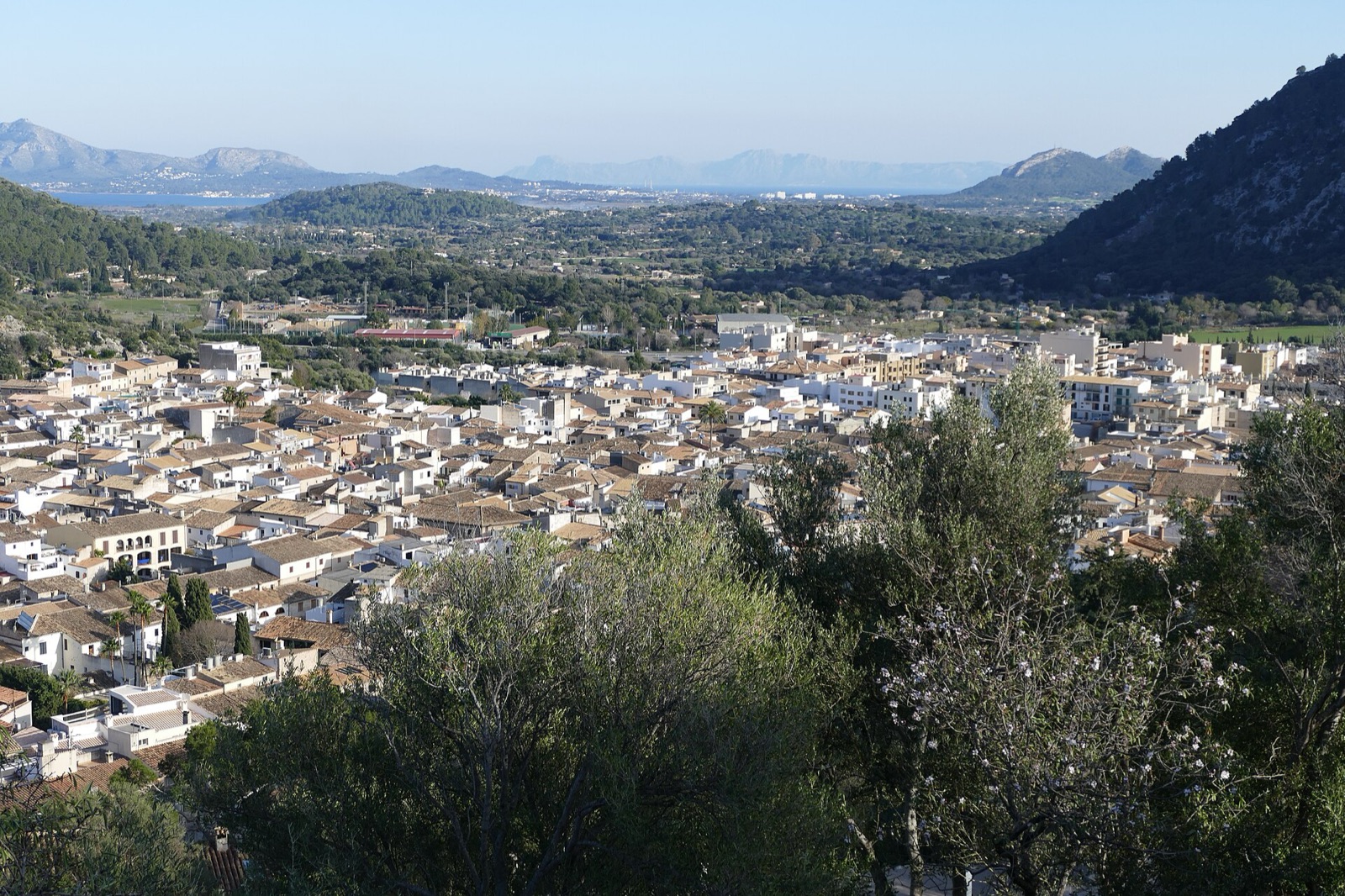
Pollença (Pollensa in Spanish) is the municipality at Mallorca’s northern tip, where the last ridges of the Serra de Tramuntana meet the Bay of Pollença and run out along the Formentor peninsula. Most of its roughly 17,800 residents live in the old town of Pollença or in Port de Pollença on the bay. Buyers come for mountain country and the sea together, 50 to 60 minutes from Palma.
At about 152 square kilometres, Pollença is one of Mallorca’s largest municipalities, and the town hall says it has the longest coastline of any on the island, much of it cliffs. Escorca lies to the west, Campanet and sa Pobla to the south and Alcúdia to the east. Most of the land is mountain, part of the Serra de Tramuntana that UNESCO listed as a World Heritage cultural landscape in 2011, cut by valleys such as Ternelles, Colonya, Bóquer and Sant Vicenç. Below them a plain of farmland runs down to the bay, with the protected wetland of s’Albufereta on the Alcúdia boundary.
About 17,800 people were registered here in 2025. Some 9,400 live in Pollença town, the seat of the town hall on Carrer del Calvari, and about 7,600 in Port de Pollença, 6 km away on the bay. Cala Sant Vicenç has a few hundred, and the rest are spread across the countryside and Formentor. The town and the port each have two state primary schools and a state secondary school, and the town also has the Monti-sion school. The health centre in the town has out-of-hours urgent care, the port has a GP unit open on weekdays until 3pm, and the nearest public hospital is in Inca.
The Ma-2200 links the port and the town with the Ma-13 motorway to Inca and Palma. The Ma-10 climbs west through the mountains to Lluc and Sóller, the Ma-2220 follows the bay to Alcúdia, and the Ma-2210 winds out along Formentor to the lighthouse. TIB buses run all year: line 301 from the port and the town to Palma via Inca, line 321 to Cala Sant Vicenç and line 322 to Alcúdia. From mid-May to mid-October, bus 334 serves Formentor, where private cars have been kept off the lighthouse road by day in recent summers. No airport bus stops in the municipality; the nearest run all year from Alcúdia.
Tourism is a mainstay of the economy. The town hall counts close to 8,000 hotel places and many more in holiday lets, mostly on rural land, and second homes make up a large share of the housing. The town and the port keep their schools, shops and markets going all year, with a Sunday market in the town and a Wednesday market in the port, while Cala Sant Vicenç goes very quiet in winter. Summer brings full beaches and queues on the Formentor road. Since 2025, faults in the desalinated water supply from Alcúdia have caused several cuts, and sewage overflows have at times closed bathing near the port.
Who buys here
Pollença has drawn painters, writers and musicians for more than a century, and British holidaymakers have come to the port since the late 1920s. Today Britons are the largest foreign community in the municipality. Buyers range from families who want schools on the doorstep in the town or the port to retired couples, sailors, walkers and cyclists, and second-home owners looking for a country house or a villa above the coves.
Property
Each part has its own stock. Pollença town has old townhouses on narrow streets, with country houses and fincas in the valleys around it: the municipality has one of the island’s highest concentrations of homes on rustic land, many let to holidaymakers under licence. Port de Pollença is mostly flats, with older villas along the Pine Walk. Cala Sant Vicenç has villas and holiday flats on rocky, often sloping plots, and Formentor a few scattered houses on partly protected land. The council is cataloguing 885 protected buildings and sites, and in January 2026 gave initial approval to a new Formentor plan that keeps the shoreline free of new building.
Getting around
Approximate times by car, outside rush hour and summer queues.
- 50–60min
Central Palma50 from the town, 55 to 60 from the port and Cala Sant Vicenç, about 70 from Formentor beach
- 55–60min
Palma airport55 from the town, about 60 from the port and Cala Sant Vicenç, by the Ma-13 motorway
- 20–30min
Hospital Comarcal d’IncaThe area’s public hospital: 20 to 25 from the town, 30 from the port
- 10–25min
Pollença town from the coast10 from the port or Cala Sant Vicenç, about 25 from Formentor beach
- 15–20min
Alcúdia old town15 from the port along the bay, 15 to 20 from the town
How Pollença breaks down
-
The historic inland town and seat of the town hall, home to about half the municipality’s residents. Narrow streets around the Plaça Major, the Calvari steps, the Sunday market, schools and the health centre with urgent care. Townhouses in the centre, country houses and fincas in the valleys around.
-
The seaside town on the bay, about 6 km from the old town, with most of the other residents. A long, shallow beach, a large harbour and marina, the Wednesday market, primary and secondary schools and a weekday GP unit. Mostly flats, with older villas on the Pine Walk.
-
A small resort of villas, hotels and holiday flats around four north-facing coves below the Cavall Bernat cliffs, about 10 minutes from the town. A few hundred residents, no school or health centre, and very quiet in winter.
-
The long, mountainous peninsula beyond the port, with no village, a handful of scattered homes, pine woods and quiet coves. Partly a Natura 2000 area, with summer limits on cars beyond the beach. Daily life runs through Port de Pollença, about 15 minutes away.
Pros and cons
For
- Old town, seaside port, small coves and a wild peninsula
- Schools and GP care in both the town and the port, all year
- Mountain walks, sea cliffs and coves across the municipality
- Bus 301 to Palma all year, and local lines between the settlements
Against
- Palma and the airport 50 to 75 min away, the hospital 20 to 30
- Summer crowds and queues, worst on the road to Formentor
- Water cuts since 2025, from faults in the desalinated supply
- Many rural homes: check licences and planning status with care
- Sewage overflows have at times closed bathing near the port
Questions buyers ask
Which places make up the municipality?
Pollença town, where the town hall is, Port de Pollença on the bay, the small resort of Cala Sant Vicenç and the Formentor peninsula. Around them lie farmland, mountain valleys such as Ternelles and Bóquer, and scattered country houses. About 17,800 people were registered here in 2025.
Town, port or countryside: which is right for me?
Choose the town if you want shops, schools, the health centre and the Sunday market on foot all year. The port puts the beach and the harbour first, with its own schools and GP unit. Country houses, Cala Sant Vicenç and Formentor give more space and quiet, but nearly every errand means a drive.
Is holiday letting possible here?
Only with a licence. Mallorca stopped registering flats for holiday lets as of 2025, and the limited new places for houses were sold by the Consell de Mallorca. Many of the licensed lets here are country houses; if the income matters, look for a home that already has a licence and get a lawyer to verify it.
What about secondary schools and hospital care?
The town and the port each have a state secondary school. The health centre in the town has out-of-hours urgent care, and the nearest public hospital is the Hospital Comarcal d’Inca, about 20 to 25 minutes from the town and 30 from the port by car.
Can I build or extend a country house?
Check carefully before you buy. Most of the municipality is Tramuntana mountain land, part of Formentor is a Natura 2000 area with a stricter new plan on the way, hundreds of owners have applied to legalise older rural homes under a Balearic amnesty, and the council is cataloguing 885 protected buildings and sites. Have a lawyer and an architect confirm what a property’s licences allow.