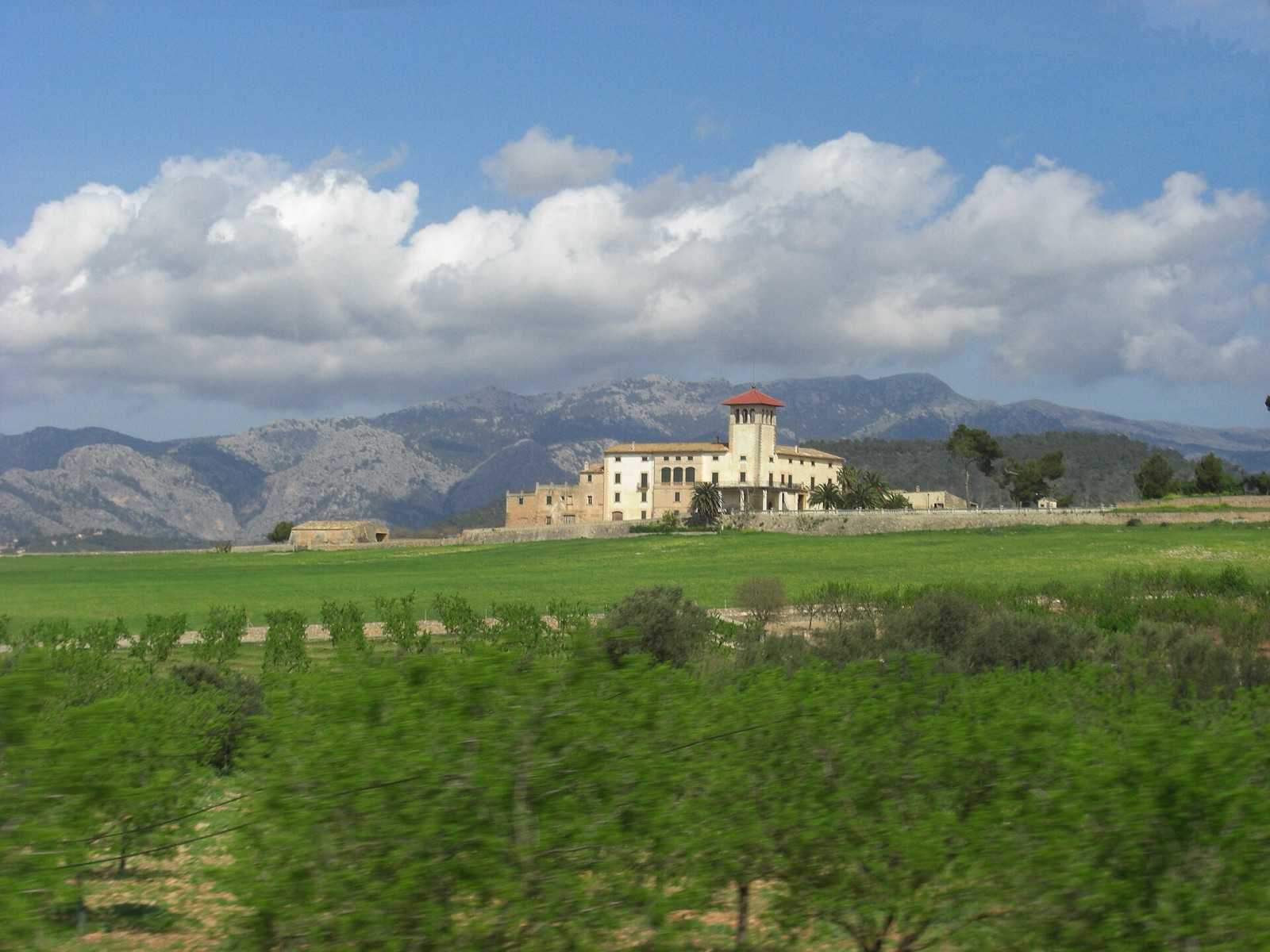
A village at the foot of the olive terraces
Caimari sits about 6 km north of Inca on the road up to Lluc, where the farmland of the Raiguer meets the Serra de Tramuntana. It belongs to the municipality of Selva, and the hillside behind it is stepped with dry-stone terraces, most of them planted with olive trees. From the 16th century, olive oil was the main source of wealth for the mountain estates around the village, alongside timber and charcoal. The modest stone houses in the old centre were largely built for the day labourers who worked those estates.
So it makes sense that Caimari’s big autumn event is about olives. The Fira de s’Oliva was first held in 1998 and reached its 28th edition on 15 and 16 November 2025.
The Fira de s’Oliva
The fair is held over a weekend in mid-November, as the harvest gets going. Stalls fill the streets and the Plaça Major, selling olives, oil and local produce, along with items carved from olive wood. In past years the old oil mill in the village has opened during the fair to show how olives were pressed by traditional methods, and there has been music and dancing in the square.
For 2026, the town hall has announced a communal lunch of fideus de carboner in the Plaça Major at 2pm on Saturday 14 November as part of the fair, followed by an afternoon of dancing. Fideus de carboner, the charcoal burners’ noodle stew, is a nod to the men who once worked in the woods above the village. Tickets for the lunch are sold locally until Wednesday 11 November, and diners bring their own plate, cup and cutlery. The full programme of stalls and activities tends to appear on the town hall website shortly before the fair, so check there before you go.
What makes Mallorcan olives and oil different
Mallorca has two protected designations of origin for olives, and the stalls at the fair are a good place to taste both.
- Oli de Mallorca is extra virgin olive oil made on the island from four authorised varieties: Mallorquina, Arbequina, Empeltre and Picual. It comes in two styles. Fruity oil is made from green olives and has bitter, peppery notes. Sweet oil is made mainly from riper olives and has almost no bitterness.
- Oliva de Mallorca covers table olives of the native Mallorquina variety, grown mostly on terraces and partly fermented in brine. They come whole and green, split green (trencades) seasoned with fennel and chilli, or naturally black and finished with local oil.
- The Mallorquina olive is small to medium, spindle-shaped and mainly bitter. A 2011 study at the University of the Balearic Islands found it is genetically different from the Empeltre grown on the Spanish mainland.
The harvest and the village
Picking begins in the fields around Caimari in early November. Green olives, for the table and for fruity oil, are picked by hand straight from the tree. Riper, darker olives are gathered from the ground. Picking is still barely mechanised, so the harvest is one of the few farm jobs here that needs extra hands.
The older trades of the mountain are remembered in the village’s small ethnological park, an outdoor interpretation centre with a charcoal burner’s hut, a charcoal stack and a snow house of the kind once used to store winter snow for ice.
Walking among the terraces
The best-known terraces are Ses Rotes, a hillside that was common land until it was divided among private owners between 1837 and 1853. They built the dry-stone walls that still hold the olive groves today, and many plots have a small hut and a mule track. About 400 metres up the Lluc road from the village, a viewpoint with parking looks across them.
The same spot is the start of the Camí Vell de Lluc, the old pilgrims’ path to the sanctuary. It climbs past the terraces into the Comuna de Caimari, a large protected area of municipal hillside covered in wild olive and pine, and forms the last stretch of the GR 222 long-distance route from Artà. Even the first stretch gives a close view of the terraces. The olive plots themselves are private, so stay on the path, especially in harvest season.
November is a good month for it, with cooler air than in summer and the Puig de Massanella rising behind the village. Higher up, the path opens out to views over the bay of Pollença on clear days.
If you are thinking of buying here
Around Caimari you will find stone village houses near the Plaça Major, small olive plots on the terraces, and older country estates among the olive and almond groves. A small plot with a hut can be tempting, but this is rustic land, where what you can build or use is tightly limited. Ask a lawyer and an architect to confirm that every building, sheds and huts included, is licensed and registered before you commit. Our guide to buying a finca explains what to look for.
Nearby, Moscari is a quieter farming village in the same municipality, Inca has the hospital, larger shops and trains, and Escorca takes in the high mountains around Lluc.
Areas in this post
Sources
Facts in this post were checked in November 2026 against these sources.
- ajselva.net/ca/noticies/fira-de-soliva-de-caimari-2026 Town hall notice (3 November 2026) and poster: Fira de s’Oliva 2026 Caimari, Saturday 14 November, fideus de carboner lunch in the Plaça Major at 14:00, tickets until Wednesday 11 November, bring own plate, cup and cutlery, afternoon dancing
- ajselva.net/ca/noticies/xxviii-fira-de-soliva 28th Fira de s’Oliva on 15 and 16 November 2025
- ajselva.net/ca/arxius-i-documents/fira-de-soliva Fair archive with editions from 1998
- mallorcamagazin.com/veranstaltungen/feste-freizeit-events/olivenfest-c Fair held on the third weekend of November in 2025; stalls with oil, olive-wood items and olive foods in the streets and square; visits to the old oil mill to see traditional pressing; music and dancing; programme published shortly before on ajselva.net
- ajselva.net/sites/cilma_selva/files/2019-03/La%20ruta%20verda%20de%20l Caimari at km 6 of the Ma-2130 Inca–Lluc road; oil the main source of wealth since the 16th century, with timber and charcoal; day labourers’ houses; harvest starts in early November in the fields around Caimari; green olives picked by hand from the tree, ripe ones from the ground; little mechanisation, so extra labour needed; fair on the third weekend of November with the old mill open; ethnological park with charcoal burner’s hut, sitja and snow house; terraces on the Camí Vell de Lluc
- ca.wikipedia.org/wiki/Oli_de_Mallorca Oli de Mallorca extra virgin PDO; four authorised varieties Mallorquina, Empeltre, Arbequina and Picual; fruity oil from green olives with bitter and pungent notes; sweet oil mainly from ripe olives
- foodswinesfromspain.com/en/food/products/olives--sauces---nuts/aceitun Aceituna/Oliva de Mallorca PDO: native Mallorquina variety, small, fusiform and bitter, partly fermented in brine; whole green, split green with island fennel and chilli, natural black finished with Mallorcan oil; terraces; manual harvest
- legislation.gov.uk/eur/2014/204/introduction/data.html Commission Implementing Regulation (EU) No 204/2014 registering Aceituna de Mallorca / Oliva de Mallorca as a PDO
- boe.gob.es/boe/dias/2014/01/16/pdfs/BOE-A-2014-452.pdf PDO specification: 2011 UIB study finding the Mallorquina variety genetically and phenotypically different from the mainland Empeltre; small to medium, spindle-shaped, mainly bitter olives; split green olives seasoned with fennel and chilli; table olives mostly grown on terraces
- illesbalears.travel/en/mallorca/interpretation-center-parc-etnologic-d Parc Etnològic de Caimari, an interpretation centre on the trades of the rural world
- ajselva.net/ca/llocs-dinteres/ses-rotes-de-caimari Ses Rotes: former common land given to private owners 1837–1853 who built the terraces; mostly olives; plots with mule tracks and small huts; viewpoint with parking 400 m up the Lluc road where the old path starts; privately owned
- ajselva.net/ca/llocs-dinteres/cami-vell-de-lluc Camí Vell de Lluc between Caimari and the sanctuary, part of the Artà–Lluc route
- ajselva.net/ca/llocs-dinteres/comuna-de-caimari Comuna de Caimari: protected municipal land of wild olive and pine crossed by the old path to Lluc
- ultimahora.es/noticias/part-forana/2017/05/23/269160/abierto-tramo-sel The Artà–Lluc walking route is the GR 222
- caminsdepedra.conselldemallorca.es/en/ruta-arta-lluc-gr-222 Consell de Mallorca: GR 222 Artà–Lluc ends at the Lluc sanctuary; stage 5.2 Caimari–Lluc open and signposted