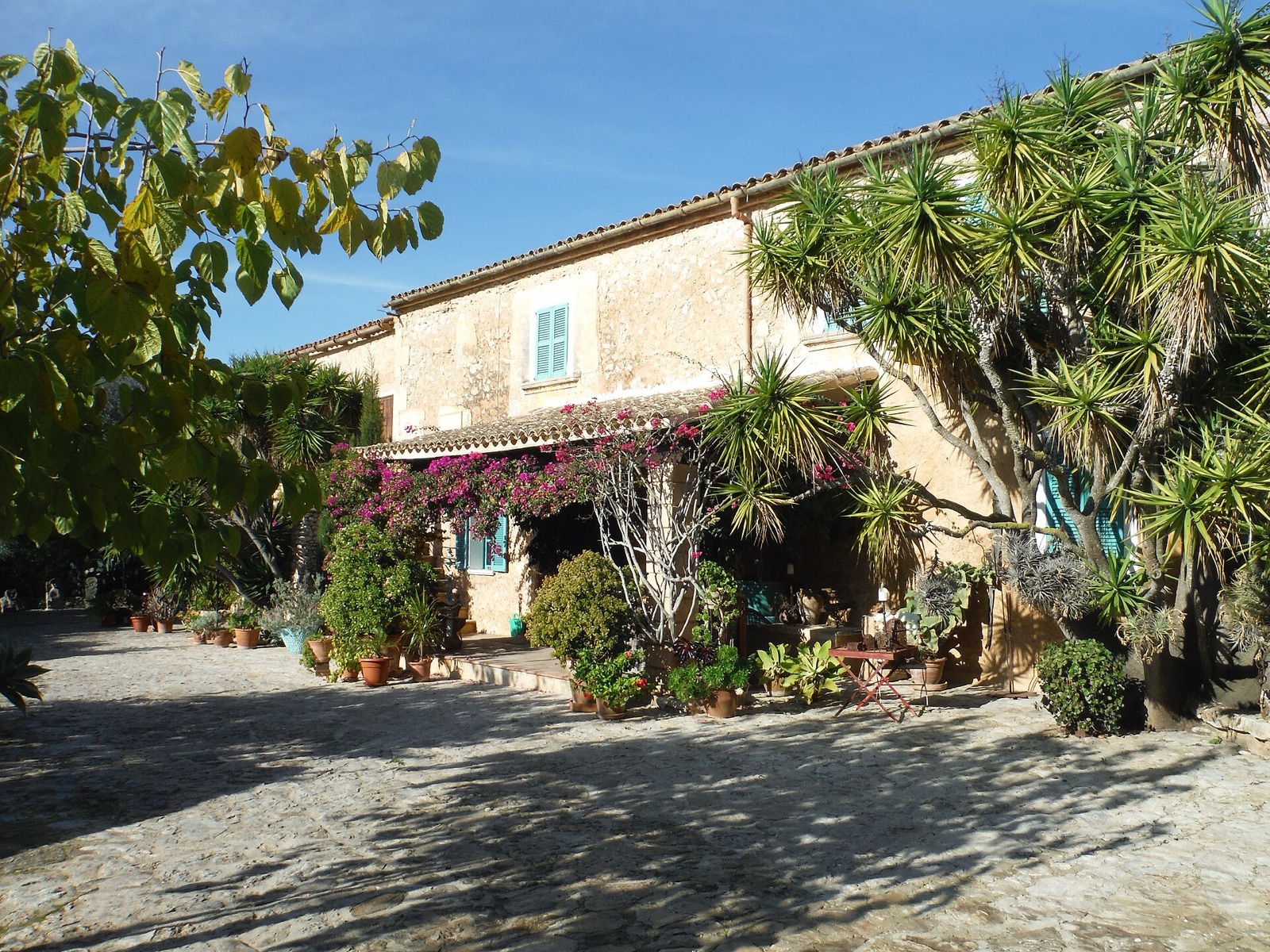
What rustic land is and how it is classified
This guide is about country houses in Mallorca, often called fincas, on rustic land (suelo rústico): land that planning law keeps out of urban development. Building there is governed by the Balearic rustic land law (Law 6/1997), the Balearic planning law (Law 12/2017, known as the LUIB), the island plan of the Consell de Mallorca (the island council), called the PTIM, and the town hall’s own general plan. The law and the island plan set minimum standards, and the town hall’s plan can be stricter.
Rustic land is either common (suelo rústico común) or protected (suelo rústico protegido). Each plot has a category, shown on the PTIM maps and in more detail on the municipal plan. One plot can contain more than one category, and where these have different minimum plot sizes the plan applies a proportional rule (Law 6/1997, art. 25.5). The category decides almost everything: whether a new house is possible, how big buildings can be, and whether old unlicensed works can still be challenged.
| Category | What it is | New house |
|---|---|---|
| AANP (protected) | Natural areas with the highest level of protection | Not allowed |
| ANEI (protected) | Natural areas of special interest, including holm oak woodland | Not allowed |
| ARIP (protected) | Rural areas of landscape interest, shaped by traditional farming | Possible, minimum plot 50,000 m² |
| ARIP-B (protected) | The wooded parts of ARIP | Not allowed |
| APT (protected) | A strip 500 m inland from the shore, and strips along roads | Not allowed |
| APR (protected) | Areas at risk of flooding, fire, erosion or landslides | Not in flood-risk areas; in other risk areas the PTIM only allows a house linked to a farm |
| AIA (common) | Areas of high agricultural value | Possible, minimum plot 14,000 m², with a binding report from the agriculture authority |
| AT (common) | Transition strips of 100 to 500 m around urban and development land | Possible, minimum plot 14,000 m² |
| SRG (common) | All other common rustic land | Possible, minimum plot 14,000 m² |
| SRG-F (common) | Common rustic land that is mainly woodland | Possible, minimum plot 50,000 m² |
Can you build a new house?
Only one house is allowed per plot (Law 6/1997, art. 25). As well as the minimum plot size in the table above, the PTIM (Norma 20) looks at when the plot was created. The application for a building licence must include a Land Registry certificate showing the plot’s full history of splits.
- Plots split off before 16 July 1997: a new house is possible if the other rules are met.
- Plots split off from 16 July 1997 to 12 October 1999: possible only if that split did not create more than five separate registered plots, not counting the original one.
- Plots split off on or after 13 October 1999: no new house, except on a first split made by gift or inheritance from parents to children, limited to one plot per child and only once.
Application to the town hall
The architect files the project with the town hall (ajuntament). For a new building on rustic land it must include landscape and environmental measures for the whole finca and the collection of rainwater from the roofs.
Binding report from the Consell
Once the file is complete, the town hall sends it to the Consell de Mallorca, which checks the minimum plot and the maximum floor area. Its report is binding.
Public notice
The Consell publishes the application in the Balearic official gazette (BOIB) for 15 days so that anyone can comment.
Report and licence
The Consell should issue its report within three months of receiving the complete file. The town hall then decides on the licence.
Extensions, renovations, annexes and pools
The PTIM sets maximum sizes for buildings on rustic land, and town halls may set lower ones. Most limits are percentages of the plot. Landscape units 1, 2 and 5 are the Serra Nord and la Victòria; Xorrigo, the Randa massif, the southern Serres de Llevant and Puig de Bonany; and the Artà peninsula.
| Limit | Rule | Where it comes from |
|---|---|---|
| Floor area | 2% of the plot in ANEI, ARIP, APR, APT, SRG-F, AIA and landscape units 1, 2 and 5; 3% elsewhere | PTIM, Norma 22 |
| Footprint of the building and other built elements | 3% of the plot in the same areas; 4% elsewhere | PTIM, Norma 22 |
| Height | Two floors or 8 m, whichever is lower; 7 m in ANEI and ARIP | PTIM, Norma 22; Law 1/1991, art. 16 |
| Volume of each building | No more than 1,500 m³ | Law 6/1997, art. 28 |
| Porches | No more than 20% of the area occupied by the rest of the building | PTIM, Norma 22 |
| Swimming pools | One per finca; new pools up to 35 m² of water surface and 60 m³ | LUIB, art. 68 bis (same rule since 25 May 2020) |
As an example, on a 14,000 m² plot of SRG outside those landscape units, 3% allows up to 420 m² of floor area. On an AIA plot of the same size, 2% allows 280 m². Ask the architect which built elements, such as terraces and paving, count towards the footprint under the municipal plan.
Extending an existing house has its own conditions. A legally built house on a plot smaller than today’s minimum cannot be extended at all (Law 6/1997, second transitional provision). Otherwise the PTIM (Norma 28) requires municipal plans to limit reform and extension to genuine traditional dwellings of at least 35 m² of usable space that were built with authorisation or before the 1956 Land Law. Works that amount to rebuilding the main structure are not allowed, apart from partial work on roofs or floors. The extension must fit within the limits for new houses, and demolishing the house means losing its residential use.
Guest houses are limited. For a new home or a conversion, the PTIM requires every room used for living, cooking or sleeping to be in one building, reached from inside it. Separate buildings may only hold service or complementary uses, in proportion to the house, and the home cannot be split into several units (Norma 20). An extension of an existing house can never create a separate residential building (Norma 28).
Are the existing buildings legal?
Rooms, terraces, pools or annexes may have been added to a finca without a licence. Under the LUIB, art. 196, the authorities (usually the town hall) can only start proceedings to restore legality, which can end in demolition, while works are under way and for eight years after they are finished. There is no time limit if the land was protected rustic land when the works were done, or if the works affect listed heritage or land reserved for public use. Whoever relies on a finishing date has to prove it. Unlicensed uses work differently: for a change of use, such as living in a converted barn, the eight years only start when the use stops, although the 2024 legalisation law has its own counting rules.
- Licencia de obras
- Building licence from the town hall. It is needed for new buildings, works on existing buildings that require a technical project, changes of use, splitting land, enclosing land and opening tracks (LUIB, art. 146). Simple works that need no technical project can go through a prior notice (comunicación previa) instead (art. 148).
- Fuera de ordenación
- ’Outside planning’. Among other cases, the status of an unlicensed building that can no longer be demolished because the time limit has passed. It is tolerated, not legal.
- Cédula de habitabilidad
- Habitability certificate issued by the Consell (in some cases a first-occupation licence takes its place). It is needed to live in or let a home and to sign permanent utility contracts, and a copy must go with any sale, or the deed must state there is none (Law 5/2018, art. 16).
- Nota simple
- A short extract from the Land Registry showing the owner, the description of the property and any charges on it.
A building outside planning (LUIB, art. 129) can only have repairs needed for health, safety or hygiene. If it was built after 1 March 1987, it also cannot get new contracts for electricity, water, gas, sewerage or telecoms. Where a legal house has an unlicensed extension, the legal part can be reformed but the unlicensed part can only be repaired, and only once it can no longer be demolished.
The extraordinary legalisation law of 2024
A Balearic decree-law of 24 May 2024, later passed as Law 7/2024 of 11 December (in force 14 December 2024), created a one-off way to legalise buildings, extensions and uses on rustic land that can no longer be demolished (additional provision 7). Each island council had to switch it on. The Consell de Mallorca did so on 13 February 2025, and the three-year window runs from its publication in the BOIB on 15 February 2025. Normal planning and habitability limits, such as plot size and the number of homes per plot, do not apply. On protected land, works qualify only if they are more than eight years old and were finished before that use was expressly prohibited in that category.
| Application made in | Charge |
|---|---|
| Year 1 (from 15 February 2025) | 10% |
| Year 2 (from mid-February 2026) | 12.5% |
| Year 3 (from mid-February 2027 until the window closes in February 2028) | 15% |
The charge comes on top of the usual taxes and fees for a new building, such as the municipal construction tax (ICIO) and the licence fee. People who pay Spanish income tax (IRPF), which mainly means Spanish tax residents, get 50% off if their average total taxable base over the last four tax years is no more than €33,000 (€52,800 for joint returns), or 25% off if it is no more than €52,800 (€84,480 joint).
Application
The owner applies to the town hall, covering every unlicensed building and use on the property at once. Anything that could still be ordered demolished has to be demolished as part of the same file.
Technical project
The legalisation project must include a wastewater treatment system that meets the Balearic Hydrological Plan, plus any design, lighting, energy or water measures the town hall has adopted.
Decision
The town hall has six months to decide. Since 14 June 2026, no answer within that time counts as a refusal.
Registration
The licence, together with a ban on holiday letting, must be entered in the Land Registry within three months.
Utilities
The legalisation licence is enough to sign permanent contracts for electricity, water, gas and telecoms. A renewal habitability certificate can be requested ten years after the licence.
The procedure cannot be used for:
- buildings the plan has marked for expropriation or demolition
- anything on public land, in road protection zones, in coastal or watercourse easements, or in illegal estates already marked in plans
- uses that need limited public places, such as tourist places, except homes legally let to tourists before 29 May 2024
- uses prohibited on rustic land, other than a single-family home
- activities or uses that the town hall has excluded by a decision of its full council
- buildings in mapped flood zones or, until those are mapped, in flood-risk areas (APR)
Water, septic systems and access
A finca may not be on mains water and may rely on a well, a rainwater cistern or delivered water. A well needs authorisation from the Govern’s Directorate General for Water Resources. The standard authorisation covers up to 7,000 m³ a year and 1 litre a second, for use on the same property. The Directorate has six months to decide, and no answer means refusal. New authorisations to use fresh groundwater are generally not granted in aquifers in poor condition or within 800 m of the coast in Mallorca, with limited exceptions for farms (Balearic Hydrological Plan, art. 123). An existing unauthorised well can sometimes be legalised. New buildings on rustic land, other than farm buildings, must also collect rainwater from their roofs (LUIB, art. 68 bis).
Buildings on rustic land must arrange their own services individually, from any existing networks (Law 6/1997, art. 30). Where there is no sewer, the house needs its own wastewater treatment. Under the PTIM, new buildings cannot discharge into cesspits or soakaway pits, and the project must show the treatment system. A treatment system in an area without sewers needs a discharge authorisation from the Directorate General for Water Resources, under the Balearic Hydrological Plan. An older finca may still have a cesspit, which matters for any works and for a legalisation, whose project must include a proper treatment system.
Access matters too. If the track crosses a neighbour’s land, there should be a right of way (servidumbre de paso) in a deed and, ideally, in the Land Registry. The owner of land with no exit to a public road can demand passage over neighbouring land against compensation (Civil Code, art. 564), but that can mean a dispute. Opening a new track needs a town hall licence, and the PTIM bars new private tracks except within one finca or along a right of way. In ANEI and ARIP, new tracks are only allowed where clearly justified (Law 1/1991, art. 19).
Farming, landscape and fences
Rustic land is meant to stay rural. The PTIM requires the part of the plot without buildings to be kept natural or in farming, livestock or forestry use. An application for a new building or a full renovation, other than a farm building, must include a project for the whole finca: keeping woodland in a fire-safe state, keeping traditional crops or the existing farm, restoring dry-stone walls and terraces, removing non-traditional fences and limiting light pollution (Decree-law 9/2020, art. 6).
A house or other activity authorised under the rustic land law is tied to the use it was authorised for, and the whole plot is linked to it in the Land Registry and cannot be split while the activity continues. Using the buildings for something else is a breach (Law 6/1997, arts. 15 and 16). Existing buildings are linked to their plot, and that link must be registered before any licence for new buildings on it (Law 6/1997, second transitional provision). Splitting rustic land needs a licence from the town hall (LUIB, art. 146; Law 6/1997, art. 33). Enclosing land needs one too, except for rebuilding or repairing existing dry-stone walls and terraces. The PTIM sets these rules for fences:
- Walls of dry stone or unrendered marès (local sandstone), up to 1 m high
- Livestock mesh on wooden posts above the wall, up to 2.20 m in total
- Openings of at least 20 cm by 20 cm at ground level every 10 m so that wildlife can pass
- No barbed wire
Holiday letting on rustic land
Letting a whole home to tourists (estancias turísticas en viviendas, often called ETV) is tightly limited in Mallorca. Under Law 8/2012, art. 50, new holiday lets are not allowed in homes on protected rustic land, unless the island’s tourism or territorial plan provides otherwise. Elsewhere the home must be in an area declared suitable, have tourist places (plazas) assigned, hold a habitability certificate or licence showing its capacity, and have been in residential use for at least five years.
- A home with a final penalty for a serious or very serious planning breach cannot be let to tourists until the breach is put right.
- Homes legalised under the 2024 law carry a registered ban on holiday letting, unless they were legally let before 29 May 2024.
- Buying new tourist places in Mallorca is suspended until the island’s tourist carrying capacity is reassessed or the Consell sets a ceiling. Places can only be moved in limited cases, such as from another home permanently withdrawn from letting (Law 3/2022, additional provision 1, still in the law as amended in June 2026).
- Holiday-let homes in fire-risk areas must also have safe access, a water tank and vegetation management within 30 m (Law 8/2012, art. 50.19).
- Palma declared its whole municipality unsuitable for new holiday lets in homes, with final approval on 28 May 2026 (BOIB, 27 June 2026). This removed the 374 new places its plan had allowed, 143 of them on rustic land.
- Letting a home to tourists without filing the required declaration, or advertising one in an unsuitable zone or without tourist places, is a very serious offence, with fines of €50,001 to €500,000 (Law 8/2012, arts. 120 and 123, as amended by Decree-law 4/2025 of 11 April).
Extra checks for your lawyer and architect
The standard checks in our guide to surveys and checks all apply. A finca needs more, and much of it is technical, so an architect usually works alongside the lawyer. See choosing a lawyer for what a lawyer does.
Land category
Confirm the category of every part of the plot on the PTIM and municipal plans, including any risk area (APR), coastal or road strip (APT) or farming area (AIA), and which extra reports a new house or conversion would need.
Plot history
Get a Land Registry certificate of the plot’s full history to see when and how it was split, and compare the registry, the cadastre and the real boundaries.
Military authorisation
Buyers who are not EU nationals, British buyers included, need military authorisation before buying rustic land anywhere in the Balearic Islands, and the notary must see it before the deed is signed. Urbanised land has been excluded since 2021. See the buying process.
Licences against reality
Match every licence, including those for the pool and annexes, with what is built, and measure floor area and footprint against the limits.
Dates and status
For anything unlicensed, establish when it was finished, whether the land was protected then, whether the town hall has opened a file, and whether the 2024 legalisation could apply.
Planning certificate
Ask the town hall for a planning certificate and check the registry for notes of planning proceedings.
Habitability and utilities
Check the habitability certificate and the electricity and water contracts.
Water and wastewater
Check the authorisation for any well, the volume allowed and the treatment system.
Access
Confirm access over public roads or a documented right of way.
Holiday letting
If letting matters, check any tourist registration, whether the area allows it and whether tourist places can be obtained.
Questions buyers ask
Can I build a house on a rustic plot I buy?
Only if its category allows housing, the plot meets the minimum size (14,000 m² or 50,000 m² depending on category, or more under the municipal plan) and its split history meets the PTIM dates. Plots split off since 13 October 1999 generally do not qualify, and farming (AIA) and risk (APR) areas need extra reports.
If the house is in the Land Registry, is it legal?
Not necessarily. Old unlicensed buildings can be registered once the time to act against them has passed, but they stay outside planning unless they are legalised. That limits works and, for buildings put up after 1 March 1987, new utility contracts.
Can I add a pool or a guest house?
One pool per finca is allowed, with up to 35 m² of water and 60 m³, within the plot’s building limits. Living and sleeping space must be in the main house, so a separate guest house is generally not allowed.
How much does the extraordinary legalisation cost?
In Mallorca the charge is 10%, 12.5% or 15% of the material cost of the works, depending on the year of the window in which the application is made, plus the usual taxes and fees for a new building. The window closes in February 2028.
Can I let a finca to holidaymakers?
Generally not if it is on protected rustic land without an existing registration, or if it was legalised under the 2024 law and was not legally let before 29 May 2024. Elsewhere it depends on zoning, the home’s paperwork and tourist places, which in Mallorca can currently only be moved in limited cases.
Sources
The official and published sources this guide relies on, checked in October 2026.
- Ley 6/1997, de 8 de julio, del suelo rústico de las Illes Balears (consolidated text) Agencia Estatal Boletín Oficial del Estado (BOE)
- Ley 12/2017, de 29 de diciembre, de urbanismo de las Illes Balears (consolidated text) Agencia Estatal Boletín Oficial del Estado (BOE)
- Ley 7/2024, de 11 de diciembre, de medidas urgentes de simplificación y racionalización administrativas de las administraciones públicas de las Illes Balears (consolidated text, last updated 13 June 2026) Agencia Estatal Boletín Oficial del Estado (BOE)
- Acuerdo del Pleno del Consejo Insular de Mallorca por el que se dispone la aplicación de la disposición adicional séptima de la Ley 7/2024 (BOIB núm. 21, 15 February 2025) Consell de Mallorca / Butlletí Oficial de les Illes Balears
- Recurso de inconstitucionalidad nº 1840-2025 contra la Ley 7/2024 (BOIB núm. 76, 17 June 2025) Tribunal Constitucional / Butlletí Oficial de les Illes Balears
- Recurso de inconstitucionalidad n.º 7410-2025, contra la Ley 4/2025, de 18 de julio (BOE núm. 283, 25 November 2025) Tribunal Constitucional / Agencia Estatal Boletín Oficial del Estado (BOE)
- Normas de ordenación del Plan Territorial Insular de Mallorca, texto consolidado junio 2023 Consell de Mallorca
- Información pública de la aprobación inicial de la Modificación número 4 del Plan Territorial Insular de Mallorca (BOIB núm. 47, 17 April 2025) Consell de Mallorca / Butlletí Oficial de les Illes Balears
- Pla territorial insular de Mallorca (PTIM): approvals, modifications and technical instructions Consell de Mallorca, Servei d’Ordenació del Territori
- Modificació núm. 4 del PTIM, aprovació inicial: Document II, Normes d’ordenació (February 2025) Consell de Mallorca
- Ley 3/2019, de 31 de enero, Agraria de las Illes Balears (consolidated text) Agencia Estatal Boletín Oficial del Estado (BOE)
- Ley 1/1991, de 30 de enero, de espacios naturales y de régimen urbanístico de las áreas de especial protección de las Illes Balears (consolidated text) Agencia Estatal Boletín Oficial del Estado (BOE)
- Ley 6/1999, de 3 de abril, de las Directrices de Ordenación Territorial de las Illes Balears (consolidated text) Agencia Estatal Boletín Oficial del Estado (BOE)
- Decreto-ley 9/2020, de 25 de mayo, de medidas urgentes de protección del territorio de las Illes Balears (consolidated text) Agencia Estatal Boletín Oficial del Estado (BOE)
- Ley 8/2012, de 19 de julio, del turismo de las Illes Balears (consolidated text) Agencia Estatal Boletín Oficial del Estado (BOE)
- Aprobación definitiva de modificación del Plan General (PG23) de las Normas 4.2.1, 4.2.2 y 4.2.4 (BOIB núm. 81, 27 June 2026) Ajuntament de Palma / Butlletí Oficial de les Illes Balears
- Ley 5/2018, de 19 de junio, de la vivienda de las Illes Balears (consolidated text) Agencia Estatal Boletín Oficial del Estado (BOE)
- Autorización para sondeo, aprovechamiento y explotación de aguas subterráneas hasta 7.000 m3 anuales Govern de les Illes Balears, Direcció General de Recursos Hídrics
- Autorización de vertido de un sistema autónomo de depuración de aguas residuales en zonas sin acceso a la red de alcantarillado Govern de les Illes Balears, Direcció General de Recursos Hídrics
- Real Decreto Legislativo 7/2015, texto refundido de la Ley de Suelo y Rehabilitación Urbana (consolidated text) Agencia Estatal Boletín Oficial del Estado (BOE)
- Código Civil (consolidated text) Agencia Estatal Boletín Oficial del Estado (BOE)
- Ley 3/2022, de 15 de junio, de medidas urgentes para la sostenibilidad y la circularidad del turismo de las Illes Balears (consolidated text, last updated 13 June 2026) Agencia Estatal Boletín Oficial del Estado (BOE)
- Ley 35/2006, de 28 de noviembre, del Impuesto sobre la Renta de las Personas Físicas (consolidated text) Agencia Estatal Boletín Oficial del Estado (BOE)
- Ley Orgánica 2/1979, de 3 de octubre, del Tribunal Constitucional (consolidated text) Agencia Estatal Boletín Oficial del Estado (BOE)
- Ley 8/1975 de zonas e instalaciones de interés para la Defensa Nacional BOE
- Resolución de 27 de noviembre de 2025 de la Dirección General de Seguridad Jurídica y Fe Pública (BOE 9 March 2026) BOE
- Real Decreto 689/1978, Reglamento de zonas e instalaciones de interés para la Defensa Nacional BOE
General information, not advice. This guide explains how things usually work for buyers in Mallorca. Rules and rates change, and every purchase is different, so check the details for your own situation with an independent lawyer or tax adviser before you commit.