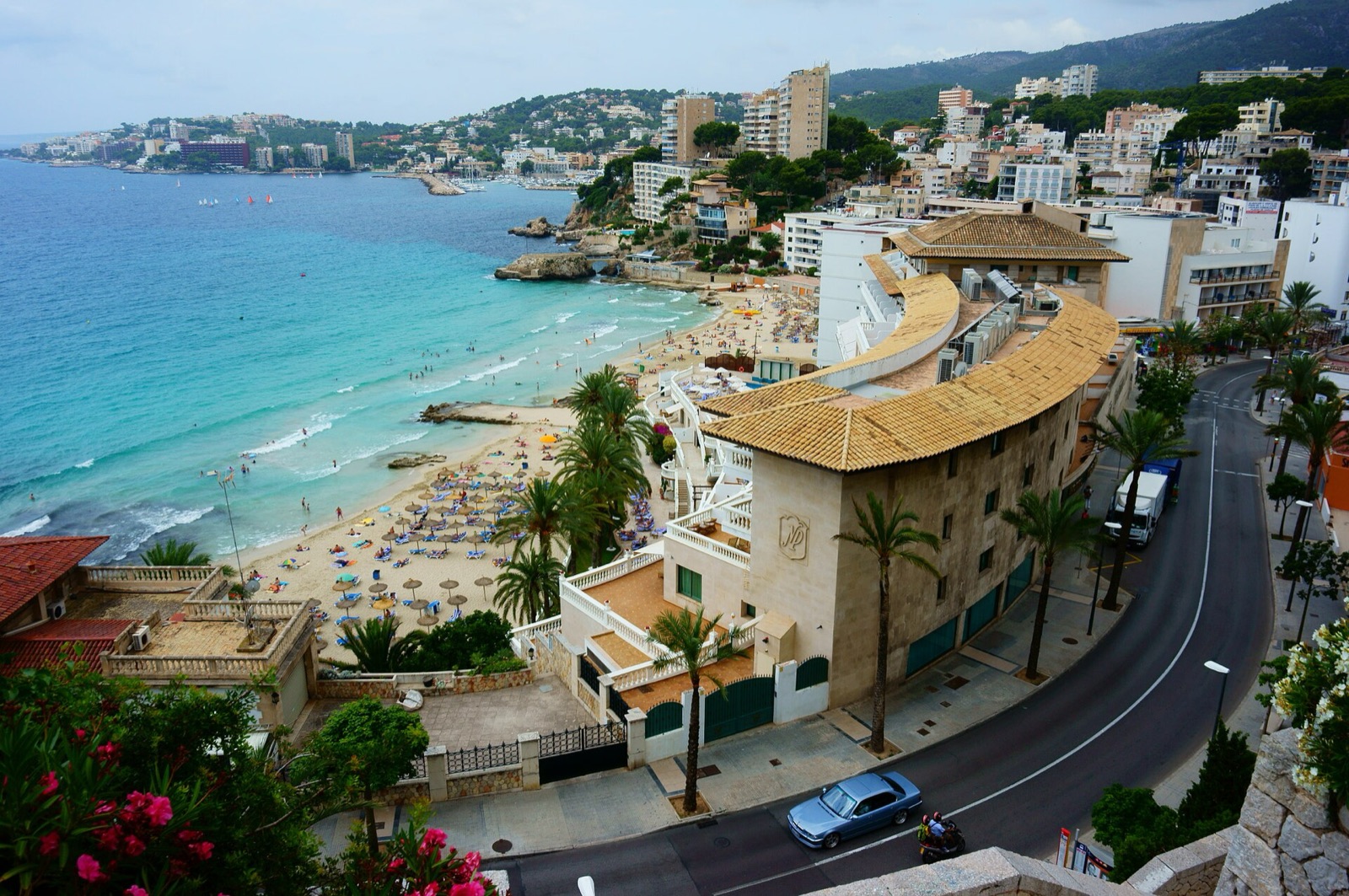
Two ways of living on one island
Mallorca is small enough that nowhere is far from the sea, yet the coast and the interior feel like different places. Inland, the towns of the Pla, the farming plain in the middle of the island, are lived in all year. They grew up around churches, squares and weekly markets, and long-established local families still make up much of the population.
The coast is more mixed. Some places are real towns with schools and health centres that stay open all winter, such as Porto Cristo, Portocolom and Colònia de Sant Jordi. Others are resorts and estates built from the 1960s onwards, busy in summer and very quiet from November to March, when some businesses close. In the Southeast, Cala Santanyí and Cala Llombards are mainly summer places, while Santanyí, Campos and Ses Salines, 10 to 20 minutes inland, keep going all year.
So the first question is less about the view and more about the calendar. If you will be here in January, look at what is open in January.
Heat, humidity and cold nights
The weather differs more than visitors expect. On summer afternoons the interior is hotter: stations at Sineu, Petra, Porreres and Binissalem often record the island’s highest readings, and Montuïri has recorded some of the hottest days on record. The air inland is drier, though, so nights cool down.
On the coast the sea breeze keeps daytime temperatures lower, but the humidity is higher. Experts at AEMET, the Spanish weather agency, point out that humid heat feels hotter than the thermometer says, and that tropical nights, when the temperature stays above 20 degrees, are much more common by the sea than in dry inland towns.
Winter brings its own contrast. On clear, cold nights frost forms in parts of the interior and in the mountains, and weather warnings for icy roads usually mention inland areas. Whatever you buy, ask what heating it has.
Space, quiet and what you can build
Inland, the choice is usually between a terraced village house in an old centre and a finca, farmhouse or old estate among almond groves and fields. Village houses put you a short walk from the bakery and the school. Country houses give space and quiet but need a car, and most stand on rustic land, where building rules are strict. Several Pla villages have protected old centres, and some town halls are rewriting their planning rules, which can hold up licences.
On the coast, most homes are in towns, resorts and estates: villas, apartments and terraced houses, many of them built from the 1960s on. Near the shore the Spanish coastal law limits what can be built and kept. In summer, popular beaches such as Es Trenc get very busy and parking is scarce, while the same places can be almost empty in winter.
Either way, have a lawyer check that every building is legal and registered. Our guides to buying a finca and surveys and checks cover what to ask.
Distances: shorter than they look
The middle of the island is close to everything. From Algaida, Palma is 30 to 35 minutes by car and the beaches at s’Arenal 25 to 30. Porreres is 25 to 30 minutes from Es Trenc, and Sineu and Petra 25 to 30 from the beaches of the Bay of Alcúdia. The far corners of the coast are often further from Palma than the inland towns: Santanyí town is 50 to 55 minutes away and Cala d’Or 60 to 70.
- Hospitals: the public hospitals are in Palma, Inca and Manacor, so check the drive from any house you like.
- Trains: Sineu and Petra have stations on the Palma to Manacor line; most of the coast has no train.
- Buses: inland towns on main roads have all-year services, while some resort coves have none in winter.
Holiday letting, in general terms
Many coastal buyers plan to let their home when they are away. That needs a tourist-rental licence, and new ones are scarce everywhere on the island. No new flats can be registered for holiday lets in Mallorca, and the Consell de Mallorca releases only a limited number of new places for houses. In its 2025 round applicants had to have owned the home for at least three years, and in March 2026 the order of applications was set by public draw.
Inland or on the coast, if rental income matters, buy a home that already has a licence and have a lawyer check it. Our guide to holiday rental licences explains how the system works.
Questions to settle before you choose
- How many months a year will you be here, and which ones?
- Do you want to walk to a café and a shop, or have no neighbours in sight?
- How do you cope with humid summer nights, and with cold winter ones?
- How far are the hospital, the airport and, if you have children, the school?
- Does the plan depend on letting the house, and does it have a licence?
Many buyers end up with a compromise: an inland town 20 minutes from a beach, or a coastal town that lives all year. Spending a few days in each in winter is the quickest way to find out which suits you.
Areas in this post
Sources
Facts in this post were checked in October 2026 against these sources.
- majorcadailybulletin.com/weather/weather/2023/07/02/114609/mallorca-we Interior stations (Binissalem, Petra, Porreres, Sa Pobla, Sineu) often record the highest temperatures; Montuïri among the hottest stations (44.5C reading reported); coastal breezes lower daytime heat; humidity makes heat feel hotter (AEMET); tropical nights (minimum above 20C) more common on the coast, drier interior towns may not get them
- ultimahora.es/noticias/local/2023/01/05/1857989/tiempo-mallorca-reyes- Winter frosts and icy roads forecast especially for the interior and the Tramuntana
- ca.wikipedia.org/wiki/Pla_de_Mallorca The Pla is the low-lying farming plain in the middle of Mallorca, with no coastline
- majorcadailybulletin.com/news/local/2025/09/23/136633/mallorca-holiday No new apartments can be registered for holiday lets in Mallorca; limited places for houses sold by the Consell de Mallorca; in the 2025 round applicants had to have owned the home for at least three years
- ultimahora.es/noticias/local/2026/03/19/2592409/consell-mallorca-activ March 2026: Consell de Mallorca opened a round of holiday-rental places for dwellings, allocated by public draw
- ca.wikipedia.org/wiki/Es_Trenc Es Trenc beach and natural park, very busy in season
- ultimahora.es/noticias/part-forana/2023/04/01/1908675/historia-mallorc Coastal law: beachfront apartment blocks at Ses Covetes demolished after being ruled illegal
- trensfm.com SFM train line Palma to Manacor with stations at Sineu and Petra
- tib.org TIB bus network: all-year lines on main inland roads, seasonal lines to some resorts