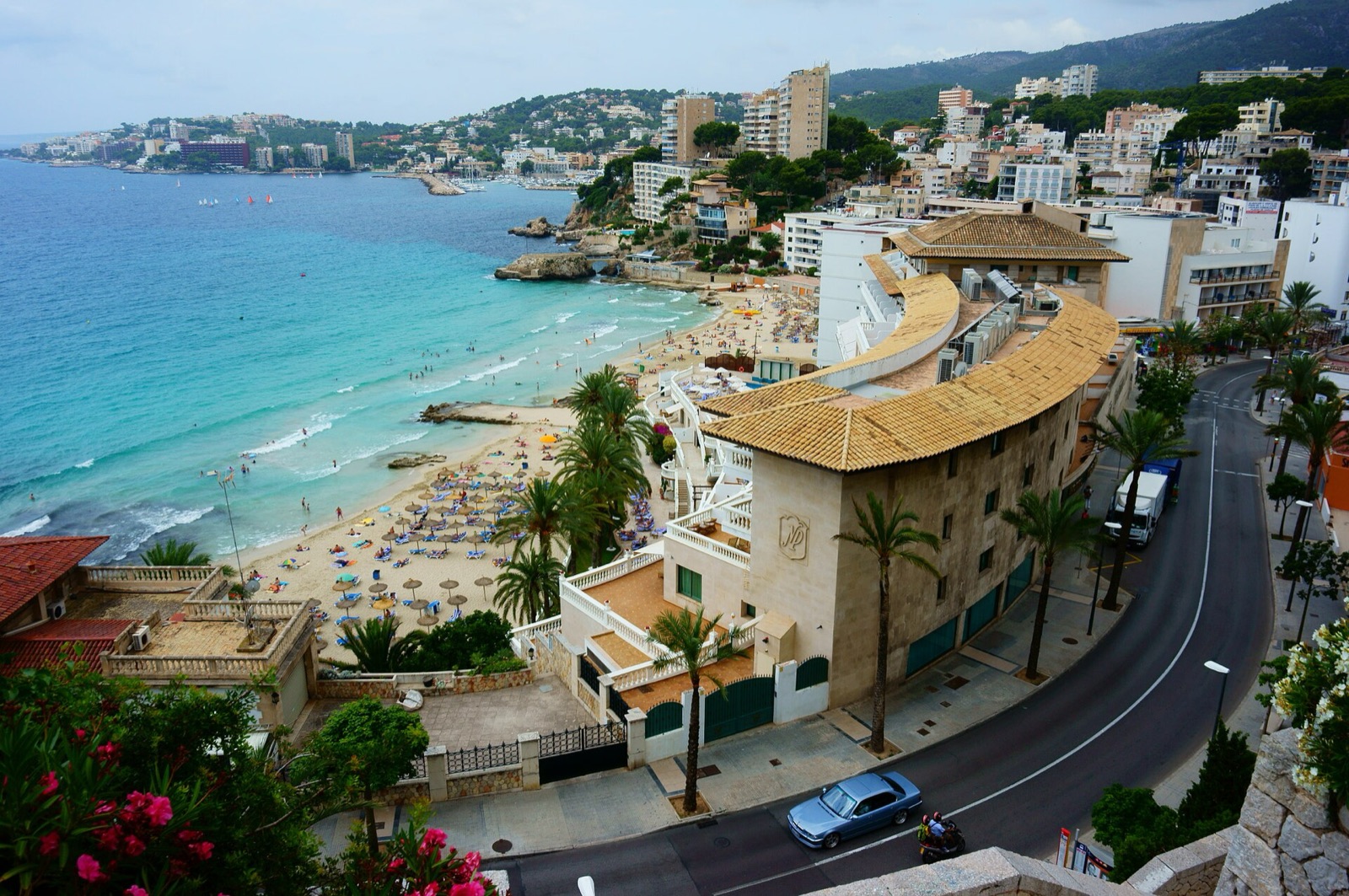
The far corner of the island
The Northeast is about as far from Palma as you can live in Mallorca: roughly 70 minutes to Artà and 80 to 85 to Cala Ratjada by car, mostly on the Ma-15 through Manacor. There is no train. In return you get hills, protected dunes and coves, and towns that have kept their own way of life. This post looks at the eastern part of the zone, the municipalities of Artà and Capdepera.
Artà: a working old town
Artà grew up inland, at the foot of a hill, to keep its distance from pirates. On top stands Sant Salvador, a church inside the walls and towers of an old fortress, reached by a long flight of steps from the parish church below. Narrow streets of townhouses climb the slope, and around Carrer d’Antoni Blanes stand the manor houses of old landowning families and of emigrants who came back rich from the Americas. Just outside town, Ses Païsses is one of the best-preserved prehistoric talaiotic villages on the island.
Most of the municipality’s people live in the town, so it works all year. On Tuesday mornings the market fills Carrer de Ciutat and the streets around Plaça del Conqueridor. There are primary schools and a state secondary school, a library in the Na Batlessa manor house and a theatre. The health centre works from an old building, and in February 2026 the start of works on a larger new one was formally signed. The nearest hospital is in Manacor, about 25 minutes away.
Capdepera and Cala Ratjada
Capdepera village climbs a hill to a walled 14th-century castle, with old stone houses on paved lanes below. It is the municipality’s administrative centre, with the town hall, the main health centre, the secondary school and a Wednesday market. Building rules in the old town are strict, so expect limits on what you can change.
Cala Ratjada, about 3 km away, is the larger place. It began as a fishing hamlet, became a summer retreat for wealthy families early in the 20th century and a resort from the 1960s. The harbour is still its heart, with Son Moll beach close by and Cala Agulla, a natural beach backed by protected dunes, to the north. A walk from Cala Gat leads to the Capdepera lighthouse on the island’s easternmost point. The town has a primary school, a public health unit and a Saturday market. Many hotels close in winter, and in late spring and early summer Cala Agulla draws party groups, which some residents find hard to live with.
Colònia de Sant Pere
Colònia de Sant Pere began in 1880 as a farming colony on the east side of the Bay of Alcúdia, laid out on a grid of straight streets. Today it is a quiet, low-rise village with a small beach below the promenade, a marina of about 250 berths, a primary school and a part-time health unit. Artà, with the health centre and secondary school, is about 15 minutes away, and a weekday bus links the two.
Many Artà families spend the summer here, so the village is busier from June to September. Water is the local worry: the village draws from wells, and in 2024 low levels led the town hall to ban mains water for gardens and pools until February 2025. Ask about current rules before buying a house with a pool.
The coast in between
Between the Colònia and Cala Ratjada, most of the coast is undeveloped. The Llevant natural park, created in 2001 and greatly enlarged in 2023, takes in the Artà hills, the cliffs of Cap de Ferrutx and the dunes of sa Canova. Coves such as Cala Torta and Cala Mitjana are reached by country roads. The old railway from Manacor to Artà, closed in 1977, is now a greenway for walkers and cyclists.
Life through the year
- Inland towns: Artà and Capdepera have schools, health care, markets and their own festivals all year. Sant Antoni in mid-January, with dimonis and bonfires, is the biggest night of the winter.
- Coast: Cala Ratjada keeps a working town in winter but loses most of its hotel trade. The Colònia gets very quiet.
- Buses: line 411 runs all year from Cala Ratjada through Capdepera and Artà to Manacor, where trains leave for Palma. Direct buses to Palma run only in the summer season.
- Holiday lets: new licences are scarce, so check any licence before you rely on rental income.
The Northeast suits buyers who want a real town with a coast nearby, walkers and cyclists, and second-home owners who prefer quiet to convenience. If you need Palma often, the drive will soon feel long. Before buying an older house, have the timber beams checked, as termites have been found in some homes in Artà.
Areas in this post
Northeast · Artà town · Capdepera village · Cala Ratjada · Colònia de Sant Pere · Artà
Sources
Facts in this post were checked in October 2026 against these sources.
- en.wikipedia.org/wiki/Art%C3%A0 Sant Salvador inside the fortress walls above the town, reached by a stairway from the parish church
- ca.wikipedia.org/wiki/Ses_Pa%C3%AFsses Ses Païsses talaiotic village, one of the best preserved on Mallorca
- artamallorca.travel/ca/mercat Artà market every Tuesday morning in Plaça del Conqueridor, Carrer de Ciutat and nearby streets
- artamallorca.travel/ca/cases_senyorials Manor houses around Carrer d’Antoni Blanes and Carrer de Rafel Blanes, of landowners and returned emigrants
- arta.cat/vivintArta/noticia.php?id=3435 Start-of-works record for Artà’s new health centre signed on 13 February 2026
- ca.wikipedia.org/wiki/Castell_de_Capdepera Capdepera castle ordered by Jaume II, walls completed 1386
- ajcapdepera.net/ca/municipi/historia Cala Ratjada from fishing hamlet to summer resort; walled village of Capdepera
- ca.wikipedia.org/wiki/Cala_Agulla Cala Agulla natural sandy beach with dunes, protected area of special natural interest
- majorcadailybulletin.com/news/local/2024/04/04/122725/mallorca-crime-m Problems with party groups in Cala Ratjada and the 2024 joint taskforce
- ibsalut.es/servei/recursos-i-centres-sanitaris/centres-sanitaris/centr Main health centre in Capdepera village; health unit in Cala Ratjada
- es.wikipedia.org/wiki/Colonia_de_San_Pedro Colònia de Sant Pere founded as an 1880 farming colony with a grid of streets, on the east side of the Bay of Alcúdia
- portsib.es/club/club-nautic-colonia-de-sant-pere Club Nàutic Colònia de Sant Pere, about 250 berths
- ultimahora.es/noticias/part-forana/2025/02/06/2319981/recursos-hidrico Water restrictions on gardens and pools in Colònia de Sant Pere from June 2024, lifted in February 2025
- ca.wikipedia.org/wiki/Parc_Natural_de_la_Pen%C3%ADnsula_del_Llevant Llevant natural park created in 2001, enlarged in 2023 to include the sa Canova dunes
- ca.wikipedia.org/wiki/L%C3%ADnia_Manacor-Art%C3%A0 Manacor–Artà railway closed in 1977, now a greenway
- tib.org/o/manager/line/411/entity/ctmr4/ca TIB line 411 Cala Ratjada–Capdepera–Artà–Manacor, all year; 411e direct to Palma in summer only
- arta.cat/vivintArta/noticia.php?id=3332 October 2025: termites found in a house in Artà
- arta.cat/vivintArta/noticia.php?id=3517 Update: July 2026 termites in two houses and a municipal building in Colònia de Sant Pere
- arta.cat/vivintArta/noticia.php?id=3543 Update: final approval on 28 September 2026 of planning modification no. 6 on water use
- arta.cat/vivintArta/noticia.php?id=3544 Update: initial approval in September 2026 of planning modification no. 7 capping tourist places, including a ceiling for Colònia de Sant Pere
- ibsalut.es/servei/recursos-i-centres-sanitaris/centres-sanitaris/centr CS Capdepera at Carrer Nou, Capdepera village; UBS in Cala Ratjada